Attorney specializing in investment law
Munich —
KLAMERT & PARTNER
Select your preferred language
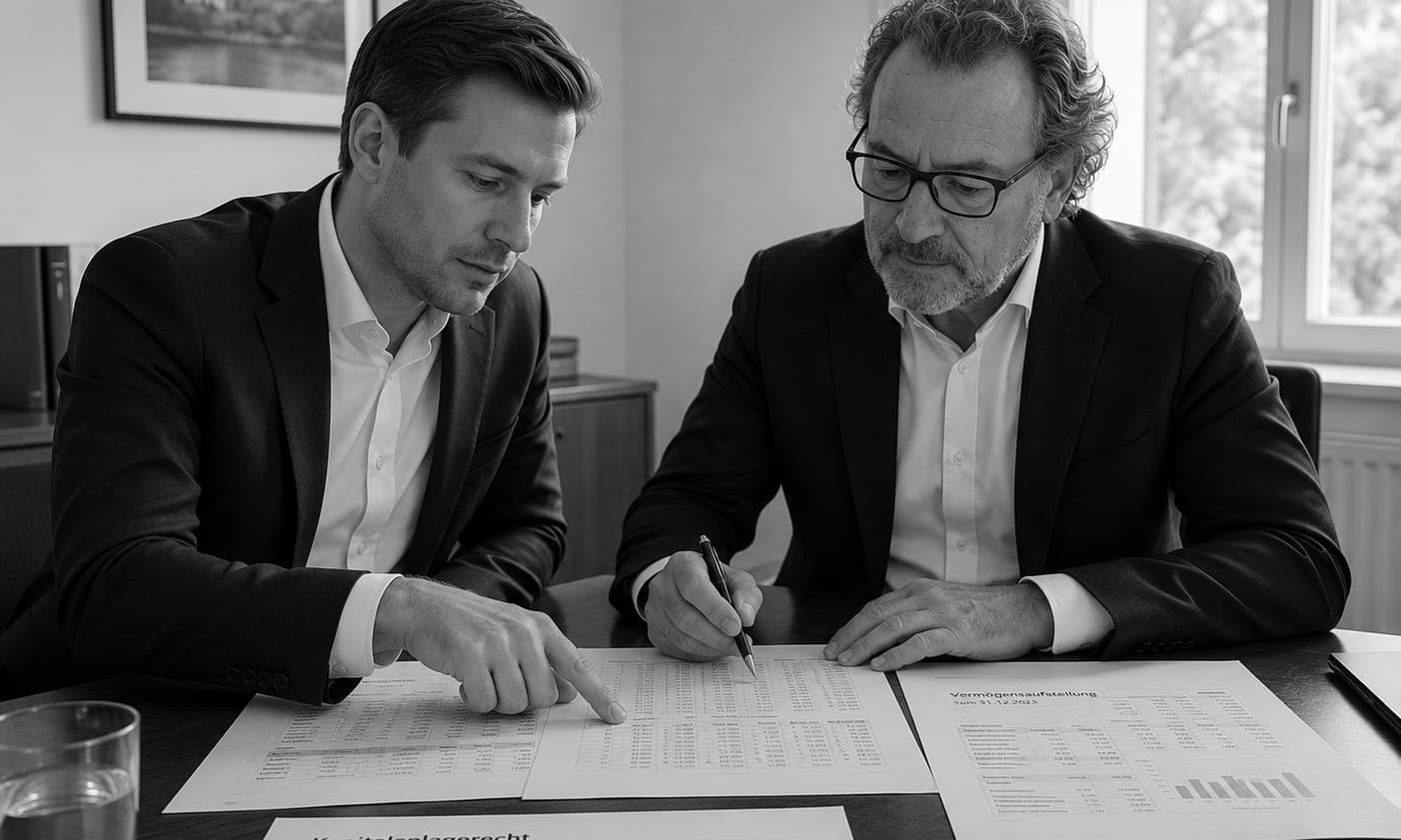
You traded cryptocurrencies on a platform that is now unresponsive. You lost several thousand euros at an online casino and have just heard that you might be able to recover your losses. You invested in a nursing home property whose leaseholding company has filed for bankruptcy. Or you subscribed to SME bonds whose issuer has just filed for bankruptcy. As attorneys specializing in investment law in Munich, we review your claims against banks, platforms, brokers, and originators. Before we are retained, we conduct a free, non-binding initial assessment of your case to evaluate the likelihood of success.
When do you need a lawyer specializing in investment law in Munich?
Investment law is not a field for generalists. Anyone seeking to enforce claims arising from faulty investment advice or a failed investment must not only have a solid grasp of the German Civil Code (BGB), but also the Securities Trading Act (WpHG), the German Capital Investment Code (KAGB), the MiFID II requirements for investment advice, the MiCA Regulation for crypto-assets (applicable as of December 30, 2024), and the meticulously developed Federal Court of Justice (BGH) case law on kickbacks, prospectus liability, and online gambling. At KLAMERT & PARTNER, we have specialized in asset law since 2005—investment law is our core area of expertise.
In practice, clients usually come to us because three questions determine their chances of success:
Were you informed of the key risks? A disclosure contained in the fine print of a sales prospectus or in English-language terms and conditions is generally insufficient—the risks must be explained in a way that you could actually understand (Federal Court of Justice “Bond” ruling, XI ZR 12/93, which remains the standard to this day).
Did the advisor disclose how much he earned from your investment? Undisclosed internal commissions and rebates from sales charges regularly give rise to claims for damages—a consistent ruling of the Federal Court of Justice (BGH) since the kickback decision of December 19, 2006 (XI ZR 56/05).
Has the statute of limitations on your claim expired yet? The standard statute of limitations is three years from the date you became aware of the claim (Sections 195 and 199 of the German Civil Code). If you wait too long, you lose your claim—even if you are otherwise entitled to it.
FROM OUR PRACTICE – INITIAL REVIEW IN SECURITIES LAW
We deliberately take more time for the initial review in investment law than we do for other cases. Investment documents are often between 80 and 250 pages long, and on top of that there are consultation records, WpHG forms, suitability statements, and in some cases years of correspondence with the bank or platform. Before we provide you with an assessment, we review all of these documents in their entirety. This initial review is free of charge at KLAMERT & PARTNER—and it is the most important filter, because in investment law, only a well-prepared case stands a chance in court.
Misconduct — Attorney specializing in investment law in Munich
Improper advice is by far the most common basis for claims in investment law. Advice is deemed improper if it was not tailored to the investor (risk tolerance, investment objectives, financial circumstances) or did not accurately reflect the product (characteristics and risks of the specific product)—the two pillars of the BGH’s Bond ruling. As attorneys specializing in advisory errors in Munich, we review advisory documentation, WpHG forms, suitability statements, and advisory records for gaps and contradictions. Missing or concealed internal commissions, portfolio commissions, and kickbacks also constitute independent breaches of the duty to disclose—compensation is typically based on the rescission of the investment in exchange for the transfer of the investment interest.
In recent years, the focus of our advisory services has shifted. Today, we see clients much more frequently in the areas of structured certificates, SME bonds, nursing home real estate, and crypto consulting than with traditional closed-end funds. What has remained the same: Anyone who can subsequently substantiate the content of the consultation—through their own notes, emails, text messages, or the statements of accompanying persons—generally has a significantly stronger negotiating position.

Investment Law Attorney in Munich — Our Practice Areas 2026
The following areas currently define our client practice at our Heimeranstraße office—the order reflects the frequency of client engagements, not their academic importance.
Crypto Losses, Crypto Scams, and Pig Butchering
Clients come to us with cryptocurrency losses arising from a wide variety of situations: trading platforms that suddenly stop processing withdrawals; wallet hacks where liability is unclear between the user, the wallet provider, and the exchange; pig-butchering schemes in which “relationships” built through social media lead to supposed investments on fake platforms; and rug pulls in token projects. Since December 30, 2024, the MiCA Regulation (Markets in Crypto-Assets) has been in effect across Europe—it establishes, for the first time, a reliable regulatory framework against which unlicensed providers must be held accountable. We review claims against the platform, against payment service providers, against banks in the payment chain, and, where applicable, against credit card companies.
Online Casino Refund
On March 22, 2024 (Case No. I ZR 88/23), the Federal Court of Justice, along with subsequent rulings, has ruled in favor of players at unlicensed online casinos: Anyone in Germany who has played at an online casino without a German gambling license can, in many cases, reclaim their losses—the gaming contract is void under Section 134 of the German Civil Code (BGB) because it violates the prohibition set forth in the State Treaty on Gambling. We assess each claim for reimbursement specifically based on the platform, the period of play, the amount wagered, and the licensing status. At our office on Heimeranstraße, we have specifically specialized in this area because, since the Federal Court of Justice’s ruling in 2024, many clients have, for the first time, felt confident enough to even bring up their case.
Trade Republic, Scalable, Neobroker — Disputes Among the New Generation of Platforms
With the rise of neobrokers, a new category of legal cases has emerged: disputes over order execution (best execution under Section 33a of the German Securities Trading Act (WpHG)), incorrect tax certificates, account suspensions—sometimes with a lengthy process to reactivate them—and the unavailability of customer support when issues arise. We review claims arising from the securities account or securities trading agreement, from Section 280 of the German Civil Code (BGB) (breach of duty), and, where applicable, from regulatory provisions. In the case of neobrokers, it is often worthwhile to file a complaint with BaFin in parallel with civil proceedings.
SME Bonds — The 2024/2025 Wave of Insolvencies
With the wave of insolvencies among small and medium-sized issuers since 2023—Eyemaxx Real Estate, Deutsche Lichtmiete, UDI, One Square Advisors, and various real estate project developers—thousands of investors have found themselves in a difficult situation. The legal grounds for claims typically include: prospectus liability of the issuer and, where applicable, jointly liable persons (Sections 8 et seq. of the Securities Prospectus Act (WpPG), Sections 20 et seq. of the Investment Services Act (VermAnlG)), advisor liability of the intermediary banks and savings banks, as well as tort claims under Section 826 of the German Civil Code (BGB) in cases of intentional misconduct. We represent investors both in out-of-court proceedings and in insolvency proceedings (filing claims with the insolvency administrator, asserting rights of separation or exclusion, representation on the creditors’ committee).
Long-Term Care Real Estate Fund
For years, nursing care properties were marketed as a “demographically secure investment”—until 2023, when a wave of bankruptcies among leaseholding companies hit investors hard. The main points of contention are: unrealistic rental projections in the prospectus, undisclosed cluster risk due to concentration on a small number of lessees, and a lack of disclosure regarding the potential revocation of nursing care reimbursements by social security agencies. We review claims against developers, trustees, brokers, and financing banks—and represent you in the lessee’s insolvency proceedings if rent payments are missed.
Structured Certificates and Spread Ladder Swaps
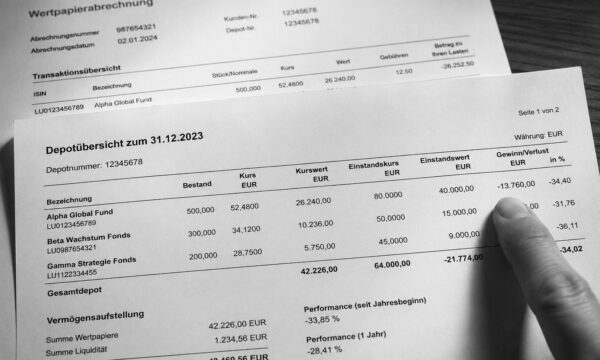
The Federal Court of Justice’s (BGH) ruling on spread ladder swaps (XI ZR 33/10, March 22, 2011) established the standard for disclosure requirements regarding structured financial products: Banks must disclose the initial negative market value. Today, we continue to represent small and medium-sized businesses and municipalities that have purchased such products—and we examine whether the basis for the advice was sound. The case law applies analogously to comparable structured products: reverse convertibles, bonus certificates, and express certificates with complex knock-out thresholds.
Cum-Ex and Cum-Cum
For institutional investors and family offices, we handle cases involving Cum-Ex and Cum-Cum transactions—both in civil proceedings (claims for damages based on advisor liability against banks and tax advisors) and in dealings with tax authorities. The subject matter is highly complex and can only be addressed through a combination of civil and tax law expertise—precisely the approach that has defined KLAMERT & PARTNER’s practice in asset law for decades.
KapMuG Model Case
In cases of large-scale damage—ranging from the insolvencies of major issuers to structural disclosure deficiencies in a specific investment product—the Capital Investors Model Proceedings Act (KapMuG) may apply. Instead of individual lawsuits, key legal issues are resolved collectively before the Higher Regional Court. In Bavaria, the Munich Higher Regional Court has jurisdiction—and is easily accessible by subway from our law firm. We will assess whether filing a claim in the ongoing model proceeding makes sense for you and which deadlines you must meet.
Precious Metal Trading Contracts and Gold Savings Plans
Gold savings plans and physical precious metals trading contracts with dubious providers have led to significant losses in recent years—mostly because the money paid in was not invested in actual gold or silver, but rather in a balance sheet construct that becomes worthless in the event of insolvency. We review claims against providers, brokers, and financing banks—and file claims with the insolvency registry.
FROM OUR PRACTICE – ONLINE CASINO REFUNDS
From the proceedings at the Munich I Regional Court, we see that casino operators now routinely defend themselves with two arguments: that the player knew the service was not licensed in Germany; and that a claim for restitution is precluded under Section 817, Sentence 2 of the German Civil Code (BGB) because the player himself violated the prohibition. The Federal Court of Justice (BGH) clearly refuted both arguments in its 2024 rulings. A prerequisite for a successful lawsuit is: proper documentation of the periods of play, deposits, and withdrawals—preferably in the form of bank statements for the relevant years.
“A lot has changed in investment law in recent years. Whereas ship funds and private equity investments used to fill the files, today it’s crypto losses, online casinos, and the insolvencies of mid-sized issuers. What has remained the same is the logic: Those who received honest advice and were fully informed rarely have a claim. Those who did not almost always do.”
— Markus Klamert, attorney and founder of KLAMERT & PARTNER
Legal Proceedings — What Your Investment Law Attorney in Munich Can Do for You
Out-of-court enforcement
Before we file a lawsuit, we write to the bank, the broker, the platform, or the originator, request access to the case files, and set forth our legal position. In about one-third of the cases we handle on Heimeranstraße, a settlement is reached at this stage—usually because the opposing party realistically assesses the likelihood of our lawsuit succeeding and wishes to avoid the risk of litigation costs.
Lawsuit filed in the Munich I Regional Court
For cases involving a dispute value exceeding 5,000 euros, jurisdiction typically lies with the Munich I Regional Court at Prielmayerstraße 7, which has its own banking and capital markets divisions; we are familiar with their case law from ongoing proceedings. Legal representation is mandatory. Depending on the volume of the case file and the complexity of the evidentiary proceedings, the duration of the proceedings in the first instance is usually between one and two years.
Registration in the KapMuG proceedings at the Munich Higher Regional Court
In cases of large-scale structural damage, we assess whether an ongoing or pending KapMuG model proceeding would allow for more efficient enforcement of claims—and what deadlines must be met. Filing for the model proceeding suspends the statute of limitations; a subsequent individual lawsuit may follow at a later date within a reasonable timeframe.
Lawsuit against a consultant or broker personally
In cases of serious, intentional breaches of the duty to advise, it may be possible—in addition to filing a lawsuit against the bank—to hold the advisor or broker personally liable (Section 826 of the German Civil Code [BGB] for intentional harm; Section 823(2) of the BGB in conjunction with protective laws such as the German Banking Act [KWG], the German Investment Fund Act [KAGB], or the German Investment Services Act [VermAnlG]). This is rarely the first, but sometimes the decisive lever—especially if the primary debtor is insolvent.
Filing for Bankruptcy and Assistance During Bankruptcy Proceedings
In the event of the insolvency of the issuer, the originator, or a key counterparty (such as the lessee of a nursing home), we will file your claim with the insolvency schedule in a timely manner, review rights of separation and exclusion, and, if necessary, represent you on the creditors’ committee. Filing the claim is often not the end, but rather the beginning of the process of enforcing your claim.
“I have never met a client who voluntarily became an investor with the intention of ending up in court. And that is precisely why investment law is a matter of trust—both for the advisor and the attorney. Our job is to make the second relationship of trust significantly better than the first.”
— Marc Frey, Attorney at Law, specializing in estate and investment law
Statute of limitations in investment law — the most important deadline for your case
The general statute of limitations in investment law is three years and begins at the end of the year in which the claim arose and the investor became aware of the claim and the party responsible for the damage, or should have become aware of them had it not been for gross negligence (Sections 195, 199 of the German Civil Code (BGB)). In cases of intentional damage under Section 826 of the German Civil Code (BGB), a maximum limitation period of ten years from the occurrence of the damage applies, regardless of knowledge (Section 199(3) BGB).
In practice, the point of contention almost always revolves around the question of knowledge: Did the investor already know in year X—or, through gross negligence, fail to know—that the investment was not, in substance, what had been promised to him? We examine the statute of limitations situation in detail and develop a strategy to toll the statute of limitations —through negotiations under Section 203 of the German Civil Code (BGB), a demand notice, filing a lawsuit, or filing a claim in the table of claims in insolvency proceedings.
Request a free initial assessment
Tell us about your case—quickly and with no obligation. We’ll assess your chances of success and get back to you shortly.
or call us directly at: 089 540 239 0
FROM OUR PRACTICE – STATUTE OF LIMITATIONS AS A MANDATORY INITIAL CHECK
Before we write even a single letter regarding a case, we first check the statute of limitations for every investment law matter. At our Heimeranstraße office, we have repeatedly had clients who came to us years later regarding an error in advice that occurred many years ago. In such cases, there are sometimes still avenues to pursue—such as the ten-year maximum statute of limitations under Section 199(3) of the German Civil Code (BGB), acknowledgments of liability, or the suspension of the statute of limitations through negotiations. But these approaches are complex and require that the statute of limitations be addressed first and foremost.
Frequently Asked Questions for Your Investment Law Attorney in Munich
How much does a securities law attorney in Munich cost?
KLAMERT & PARTNER provides an initial assessment of your case free of charge. Any further legal advice is provided after you retain our services—either based on RVG fees (tiered according to the amount in dispute) or according to an individual fee agreement. If you have legal expense insurance, we will handle the coverage inquiry. Important: Many legal protection insurance policies exclude investment law from their standard coverage or limit it to certain types of products—we will review your policy before filing a lawsuit.
What are the statutes of limitations under investment law?
The standard statute of limitations is three years from the date of discovery (Sections 195 and 199 of the German Civil Code (BGB)). In cases of intentional torts under Section 826 of the German Civil Code (BGB), the maximum limitation period is ten years from the date the damage occurred (Section 199(3) of the German Civil Code (BGB)). Have your statute of limitations situation reviewed as early as possible—in investment law, it is the most important factor in distinguishing between a promising and a hopeless case.

Can I get a refund for my online casino losses?
With regard to unlicensed online casinos, the Federal Court of Justice significantly improved the legal situation for players in its ruling of March 22, 2024 (I ZR 88/23) and subsequent decisions: The gaming contract is generally void under Section 134 of the German Civil Code (BGB) because it violates the prohibition set forth in the State Treaty on Gaming. Deposited amounts can be reclaimed. We assess the claim for reimbursement specifically based on the platform, licensing status, and period of play. A prerequisite is proper documentation of deposits and withdrawals.
Am I entitled to compensation for crypto losses?
When it comes to crypto losses, it depends on how the loss occurred. In cases of hacks or unauthorized withdrawals, we investigate claims against the platform and against payment service providers. In cases of pig-butchering schemes and similar investment fraud, it often makes sense to file a criminal complaint in addition to pursuing civil remedies, because the funds can only be traced internationally through law enforcement agencies. We coordinate both—and bring in forensic experts early on if the evidence requires it.
What is the Model Procedure for Capital Investors (KapMuG)?
The Model Proceedings Act for Investors (KapMuG) allows key legal and factual issues arising from numerous similar investor cases to be resolved collectively before the Higher Regional Court. Instead of a thousand individual lawsuits—which carry the risk of conflicting judgments—there is a model proceeding whose outcome is binding on all registered investors. In Bavaria, the Higher Regional Court of Munich has jurisdiction. Registration in the model proceeding also suspends the statute of limitations.
What is a kickback agreement?
A kickback agreement is a rebate that the investment advisor (usually a bank) receives from the product provider and does not disclose to the investor. According to established Federal Court of Justice (BGH) case law since the decision of December 19, 2006 (XI ZR 56/05), the bank is obligated to disclose to the investor, without being asked, all commissions it receives from the investment. If this does not occur, a breach of the duty to inform exists—and the investor is entitled to rescind the investment in exchange for the transfer of the investment interest.
What can I do if the issuer of my bond is insolvent?
In the event of the issuer’s insolvency, we will file your claim with the insolvency schedule in a timely manner and determine whether there are any additional claims against intermediary banks (advisory liability) or against jointly liable parties (prospectus liability under Sections 8 et seq. of the Securities Prospectus Act (WpPG) and Sections 20 et seq. of the Investment Services Act (VermAnlG)). In the majority of cases, a simple filing with the insolvency table results in a recovery rate in the low single-digit percentage range—advisory liability is therefore generally the more economically advantageous lever.
Do I have any recourse in the event of a dispute with Trade Republic, Scalable, or another neobroker?
Yes, in principle, all obligations under banking and securities law also apply to neobrokers. We review claims arising from the custody account or securities trading agreement, from Section 280 of the German Civil Code (Breach of Duty), and, where applicable, from regulatory provisions (in particular Section 33a of the German Securities Trading Act regarding best execution). In addition to pursuing civil claims, it is often worthwhile to file a complaint with BaFin, as neobrokers typically respond much more quickly to regulatory inquiries than to letters from attorneys.
Who will cover the legal fees if I win the case?
In investment law—unlike in labor law—the basic rule on costs set forth in Section 91 of the German Code of Civil Procedure (ZPO) applies: The losing party bears the costs of the legal proceedings, including the opposing party’s attorney’s fees. In the event of a settlement, the costs are usually offset against each other. If valid legal expenses insurance is in place, it covers attorney’s fees, court costs, and expert fees within the scope of the policy.
What documents do I need for the initial review?
For an efficient initial review, please gather the following: the investment prospectus (or, for crypto/casino investments: the platform name and URL), the subscription or enrollment form or the platform’s terms and conditions, advisory documentation, and the WpHG form, a suitability statement, all correspondence with the bank, broker, or platform (emails, letters, notes from conversations, screenshots), current balance and valuation statements or bank statements showing deposits and withdrawals, letters from insolvency administrators (if available), and your tax documents related to the investment. You can upload these documents in encrypted form via our client portal or drop them off in person at Heimeranstraße.
“What clients often underestimate in investment law is the emotional aspect. It’s not just about money that’s been lost—it’s about the feeling of having been deceived. That’s exactly why it’s so important to us to be honest during the initial consultation. If a case has no prospects, we say so. And if it does have prospects, we say that too—and get to work.”
— Johannes Goetz, Attorney at Law, specializing in banking, capital markets, and insurance law
Investment Law Attorney in Munich — Right Next to Theresienwiese
Our law firm at Heimeranstraße 37 is located right next to the Theresienwiese in Munich’s Westend (Schwanthalerhöhe). Clients from all over Munich—from Schwabing to Bogenhausen, Pasing, Sendling, and Au-Haidhausen—can reach us by subway (U4/U5 to Schwanthalerhöhe, U3/U6 to Goetheplatz, U1/U2/U7/U8 to Sendlinger Tor) and by tram lines 18 and 19. We can reach the Munich I Regional Court (Prielmayerstraße 7) and the Munich Higher Regional Court in just a few minutes by subway (U4/U5 to Karlsplatz)—a practical advantage that quickly adds up when it comes to file review appointments and oral hearings. Appointments outside of office hours and online cases with encrypted communication are available by arrangement. Consultations are offered in German, English, Ukrainian, Russian, and Portuguese.
FROM OUR PRACTICE – MULTILINGUAL INVESTMENT MANAGEMENT ACCOUNTS
In the field of investment law, we have regularly represented Russian- and Ukrainian-speaking investors in recent years who have invested in Germany in crypto platforms, precious metals trading contracts, or cross-border online investments—often based on English-language or inadequately translated contractual documents. Here, too, the following applies: challenging the transaction on the grounds of a mistake in declaration (Section 119 of the German Civil Code) or fraudulent misrepresentation (Section 123 of the German Civil Code) are often the most promising avenues—provided that the advisory relationship can be proven. Denys Osypenko is the designated contact person for immigration law; in investment law, he assists licensed attorneys when Russian- or Ukrainian-speaking clients come to us.
Investment Law Attorney in Munich — Request a Free Initial Consultation
Tell us about your case—we’ll review your potential claims at no cost to you, assess whether the statute of limitations is about to expire, and determine whether taking legal action is financially worthwhile. If the statute of limitations is about to expire, we’ll schedule an appointment at short notice, often on the same or the following business day. Online via our contact form, by phone at 089 540 239 0, or in person at our law office in Munich at Theresienwiese.
“Anyone who has invested their money and now sees it gone has no need for legal marketing. What they need is an honest assessment of what’s possible and what isn’t. That’s exactly the idea behind our free initial assessment—it’s not a bait-and-switch, but our business philosophy for over thirty years on Heimeranstraße.”
— Markus Klamert, attorney and founder of KLAMERT & PARTNER