
, Attorney Specializing in Tenancy Law
Munich —
for tenants and landlords
Select your preferred language

Tenancy law in Munich is rarely an abstract topic in this city. Anyone here who pays €1,800 in rent and utilities for 65 m², is facing a termination notice for personal use, or—as a landlord—is looking at two months of unpaid rent knows that this involves amounts and deadlines that very quickly become very real. At KLAMERT & PARTNER, we have been advising both sides of the Munich rental market since 2005—tenants as well as private landlords, homeowners’ associations, and property managers. As attorneys specializing in rental law in Munich, we’re not only familiar with the Munich rent index and Sections 535 et seq. of the German Civil Code (BGB), but also with the case law of the Munich Local Court at Pacellistraße 5, where most of the city’s housing disputes are heard. For us, rental law in Munich means: a free initial assessment, clear language, no boilerplate documents—and advice that honestly tells you whether the dispute is worth pursuing.
When do you need a real estate attorney in Munich?
Tenant-landlord law in Munich has a unique character. Unlike in many medium-sized German cities, housing here is scarce, expensive, and politically charged—and that is precisely why tenant-landlord disputes end up in the Munich District Court with a frequency we would hardly see in any other German city. Tenants are fighting to keep apartments whose rent levels would be unthinkable on the open market today. Landlords want to make use of properties they purchased twenty years ago. Both sides have valid reasons—and if the conflict escalates, both sides need legal advice from an attorney who understands their position.
At KLAMERT & PARTNER, we deliberately advise both sides—not in the same case, but within the same area of law. This dual perspective is a practical advantage in Munich’s rental law: Anyone who appears in court as a tenant’s attorney knows how the landlord’s side argues its case. Those who advise landlords are familiar with the objections that tenant attorneys typically raise. In Munich’s housing market—with its rent caps, rent ceiling limits, preservation ordinances, and neighborhood protection measures—this familiarity with both sides is particularly valuable—the patterns of argument have remained the same for decades, and it is their application in individual cases that makes the difference.
FROM OUR PRACTICE – OBSERVATIONS AT THE MUNICH LOCAL COURT
At the Munich Local Court, Housing Division (Pacellistraße 5, 80333 Munich), we see a recurring pattern: In the majority of cases, eviction lawsuits due to late payment do not end with a judgment but rather with a settlement involving installment payments—provided the tenant secures legal representation in a timely manner. Especially for tenants in the city center who, after receiving a notice of termination due to late payment, would be unable to find a comparable apartment on Munich’s overheated housing market, a settlement is often the more economically sensible outcome than eviction. From the landlord’s perspective, the same principle applies in reverse: Anyone seeking swift enforcement should not file the lawsuit themselves but have it filed properly by a lawyer—otherwise, a procedural error could result in an additional month of lost rent.
Common issues that clients bring to us:
- Tenant: I received the notice of termination for the landlord’s personal use today, effective December 31—is it even valid?
- Landlord: My tenant hasn't paid rent for two months—when can I terminate the lease without notice?
- Tenant: There’s been mold on the exterior wall for three months, and the landlord isn’t responding—how much can I reduce my rent?
- Landlord: I'm planning to raise the rent in accordance with the rent index—what is the required notice period?
- Tenant: The lease includes a clause regarding cosmetic repairs that the landlord is demanding I make when I move out—am I required to do so?
- Landlord: The tenant has sublet the property illegally—can I seek damages and terminate the lease at the same time?
- WEG: A majority vote at the owners' meeting approved an expensive renovation—can I challenge this decision?
“In Munich’s rental law, I’ve seen the same mistake for over thirty years—on both sides: clients wait too long. The tenant waits because he hopes the mold problem will resolve itself. The landlord waits because he thinks he’ll eventually talk things out with the tenant who isn’t paying. As a result, both lose money and opportunities. Those who seek legal advice early on almost always achieve a better outcome—regardless of which side of the contract they’re on. That’s exactly why we offer a free initial assessment.”
— Markus Klamert, attorney and founder of KLAMERT & PARTNER
Tenant Law — Your Rights in Munich
Tenants in Munich face a market with structural pressures: With average asking rents well above the rent index and waiting lists for any reasonably affordable apartment, the question of whether they can keep their current apartment often weighs more heavily than anything else. As attorneys specializing in tenancy law in Munich, we represent tenants in precisely the situations that are most common in the city.
Rent Control and the Munich Rent Index
Munich is an area with a tight housing market—the rent control measures under Sections 556d et seq. of the German Civil Code (BGB) have been in effect since 2015 and have been extended several times. For newly concluded lease agreements, the rent may not exceed the local comparative rent by more than ten percent. Tenants who believe they are paying too much may file a formal complaint under Section 556g(2) of the German Civil Code (BGB)—upon which the overpaid amount must be refunded. The Munich rent index, published by the Munich City Council, serves as the authoritative basis for calculation.
Termination for Personal Use — Formal Obstacles
From a tenant’s perspective, we receive a notice of termination for personal use in Munich almost every week. Most of these notices are not as watertight from a formal standpoint as their recipients might initially assume in their initial panic. We review the following: the specific identification of the person for whom the owner’s personal use applies (Section 573(2)(2) of the German Civil Code (BGB)), the justification for the need, the proper notice period in accordance with Section 573c BGB (three to nine months depending on the length of the tenancy), and the possibility of a hardship exemption under § 574 BGB (particularly for elderly tenants, tenants with chronic illnesses, and tenants who can demonstrate that they cannot find comparable housing in Munich).

Rent Reduction Due to Defects
Mold, heating failure, noise from the apartment above, defective windows—for any of these defects, the rent may be reduced under Section 536 of the German Civil Code (BGB) if the landlord is aware of the defect and fails to remedy it within a reasonable period of time. The amount of the reduction depends on the extent of the disruption—we assess it based on standard rent reduction tables. Important: Defects must be reported in writing, ideally with photographs and a deadline for rectification.
Cosmetic Repairs and Moving Out
Clauses regarding cosmetic repairs in lease agreements have been invalid in many forms since the Federal Court of Justice (BGH) rulings of the past twenty years. Any tenant who, upon moving out, is asked to paint walls, varnish doors, or hand over the apartment “swept clean” should have their lease agreement reviewed. At the Munich Local Court, we regularly see lease agreements from the 1990s and 2000s containing clauses that are invalid under current case law—and tenants who have fulfilled obligations for decades that they were never actually required to fulfill.
Request for a Rent Increase
Landlords may increase the rent under existing leases in accordance with Section 558 of the German Civil Code (BGB)—up to the local comparative rent and by no more than 20 percent over three years (in Munich, the cap is even 15 percent). The request for an increase must be made in writing, must be substantiated (typically with a rent index, comparable apartments, or an expert opinion), and must allow a two-month period for the tenant to give consent. We review requests for increases both formally and substantively—a high proportion of the increases we have reviewed were, at least in part, unenforceable.
FROM OUR PRACTICE – RENT REDUCTION WITH A CHAIN OF EVIDENCE
At the Munich Local Court, we repeatedly see cases involving rent reductions that could have been won on procedural grounds—but fail due to insufficient evidence. A client from Sendling reduced his rent for two years due to mold without notifying the landlord in writing. In the eviction proceedings, the landlord was able to dispute the defect outright because no written notice of the defect had been provided. Our recommendation to tenants in Munich regarding rental law: Report every defect in writing (an email is sufficient) on the day it is discovered, including a photo and a deadline. Those who do this consistently will have a chain of evidence that holds up in the event of a dispute.
Rental Law for Landlords — Protecting Your Interests
Landlords in Munich fall into two groups: private owners—often with one or two apartments inherited or held as part of their retirement planning—and smaller institutional landlords. Both face the same fundamental problem: German rental law is designed to favor tenants, and in Munich, this is compounded by judicial practices that reinforce this trend in many situations. Landlords who want to operate with confidence should not improvise when it comes to legal matters.
Landlord Rights in the Event of Late Payment
If the tenant falls behind on rent payments—either in full or by a significant portion—for two consecutive months, the lease may be terminated without notice (Section 543(2)(3) of the German Civil Code (BGB)). The same applies if the tenant is in arrears on two months’ rent over a period exceeding two months. We draft notices of termination in a legally sound manner, including, as an alternative, a notice of ordinary termination—which, pursuant to § 569(3)(2) BGB, cannot be “cured” by subsequent payment. Practical note: Upon service of the eviction lawsuit, many tenants unexpectedly make the overdue payments. This may have a curative effect on the termination without notice; however, it does not apply to the alternative notice of ordinary termination.
Termination for personal use: Formally Sound
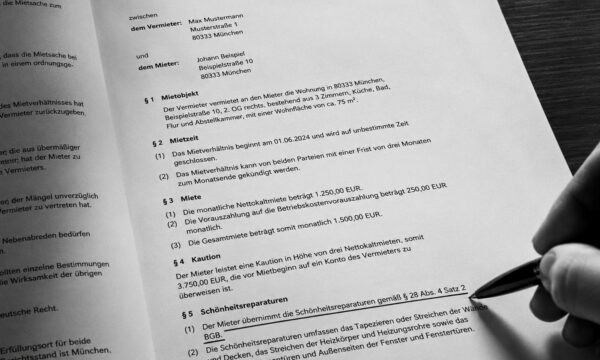
From the landlord’s perspective, a termination for personal use must be substantively sound and formally correct. We draft notices of termination for personal use that include specific identification of the individual, a detailed justification of the need (size of the apartment, personal circumstances, intended use), and compliance with the required notice periods. A fraudulent notice of termination for personal use can result in the tenant filing a claim for damages in the five-figure range—a risk that many private landlords in Munich underestimate when it comes to tenancy law.
Ensuring Rent Increases Are Legally Sound
We draft rent increase requests in such a way that they are substantively justified and formally unassailable: reference to the rent index or three comparable apartments, clear calculations, a deadline for approval, and a notice regarding the special right to terminate the lease. For larger rental portfolios, we combine rent increases with modernization cost apportionment under Section 559 of the German Civil Code (BGB)—here, too, the formal requirements regarding advance notice, calculation, and the apportionment period are stringent.
Modernization Surcharge and Renovation
Eight percent of the modernization costs may be passed on to the rent annually, up to a maximum of three euros per square meter over six years. In the case of energy-efficiency renovations, we examine the hardship provision under Section 559(4) of the German Civil Code (BGB)—this becomes relevant for clients with lower incomes and often results in the modernization surcharge being unenforceable, at least temporarily. In Munich’s rental market, with its high existing rents and political pressure to modernize, this specific detail is often the deciding factor.
Reviewing and Drafting a Lease Agreement
The most common reason for retaining a landlord’s attorney is not an ongoing dispute, but rather as a precautionary measure: to draft a new lease, review an existing one, or include a special right of termination. We draft leases with cap clauses, graduated rent agreements, security deposit provisions, and clear cosmetic repair clauses that comply with current Federal Court of Justice (BGH) case law. Those who have a contract reviewed before signing it are, in most cases, in a significantly stronger position afterward.
Request a free initial assessment
Tell us about your case—quickly and with no obligation. We’ll assess your chances of success and get back to you shortly.
or call us directly at: 089 540 239 0
FROM OUR PRACTICE – TERMINATION FOR INTERNAL NEEDS UNDER OBSERVATION
A client from Munich’s Westend district, a private landlord of a three-room apartment, wanted her daughter to move in after she finished college—a classic case of personal need. She drafted the first notice of termination herself, but it was rejected by the tenant’s attorney due to insufficient justification of her need. The second notice of termination was prepared with the assistance of an attorney: Specific identification of the individual, justification citing size, location, personal reasons, and reference to Federal Court of Justice (BGH) case law on the standard of need. We had to anonymize the case—Section 6 of the BORA (as amended) prohibits us from advertising using specific clients—but the logic behind it shows: In Munich tenancy law, when it comes to personal need, the thoroughness of the justification is almost always the deciding factor, not the need itself.
“My favorite line from landlords: ‘The lease is from 2007—that was standard practice back then.’ That’s exactly where the problem lies. What was standard practice in 2007—cosmetic repairs, cost-sharing clauses, lump-sum end-of-tenancy renovations—is now largely invalid. Under Munich tenancy law, this means that when the tenant moves out, the landlord is left without the claims he had anticipated. That’s exactly what we review in every existing lease agreement—clause by clause.”
— Marc Frey, Attorney at Law, specializing in contract and property law
Termination in Tenancy Law — Personal Use, Breach of Contract, Written Form
Under Munich tenancy law, notices of termination are the most common reason for retaining legal counsel—for both tenants and landlords. The legal framework is clear; the practical application is complicated. We review notices of termination in four steps: written form pursuant to Section 568(1) of the German Civil Code (BGB), authority to act on behalf of the party, substantive grounds for termination, and compliance with notice periods.
Termination with Notice by the Landlord
A landlord’s ordinary termination requires a legitimate interest (Section 573 of the German Civil Code (BGB)). The most common grounds are the landlord’s own use of the property, a culpable breach of contract by the tenant, and termination for economic reasons (when continuing the lease would cause the landlord significant economic harm). In residential lease agreements without a legitimate interest, ordinary termination is simply not permitted—this is the key difference from commercial lease law.
Termination Without Notice
Termination without notice pursuant to § 543 BGB is possible in cases of late payment, use in violation of the contract (noise, unauthorized subletting, misuse of the property), insults or threats, or significant endangerment of the rented property. In practice, this is almost always combined with a notice of termination with notice as a precautionary measure—in case the court does not uphold the termination without notice, the termination will at least take effect on the next scheduled termination date.
Protection Against Dismissal and Social Clauses
Even if the notice of termination is valid, the tenant may file an objection under Section 574 of the German Civil Code (BGB) if the termination of the lease would cause hardship for the tenant, his or her family, or another member of the household that cannot be justified even after taking the landlord’s legitimate interests into account. Under Munich’s rental law, this hardship provision is more frequently relevant in practice than in other locations—the housing market situation itself can constitute grounds for hardship, particularly for older tenants who have been renting for a long time.
Notice Periods
The standard notice periods for landlords are governed by Section 573c of the German Civil Code (BGB): three months for tenancies of up to five years, six months for tenancies of up to eight years, and nine months for tenancies of eight years or more. For the tenant, a three-month notice period applies regardless of the length of the lease. Important: The notice period begins upon receipt of the notice of termination—and “receipt” means actually receiving it in person or finding it in the mailbox. Late delivery postpones the termination date by a full month.
Rent Reduction and Rights Regarding Defects
A rent reduction under Section 536 of the German Civil Code (BGB) takes effect automatically—it does not need to be requested. If a tenant has a defect that significantly impairs the livability of the apartment, the tenant is no longer obligated to pay the full rent as of that point in time. In practice, however, the matter is more complicated: The landlord must be aware of the defect, the landlord must have been given a reasonable period of time to remedy it, and the amount of the reduction must be reasonable—which, in the event of a dispute, almost always becomes a matter of evidence.
Common Defects and Their Reduction Rates
Heating failure in winter (50–100% rent reduction depending on severity), mold in the bedroom (10–30%), drafty windows (5–15%), constant noise from the neighboring apartment (10–25%), water damage (depending on extent). Standard rent reduction tables provide guidance—but in each individual case, the expert opinion or the court’s assessment is decisive. We make realistic assessments because an excessive reduction triggers the risk of extraordinary termination due to late payment.
Notice of Defects — Form and Deadline
The notice of defect should be submitted in writing—an email with a read receipt is sufficient, but certified mail is safer. Content: Description of the defect, date it was discovered, photographs if applicable, a deadline for rectification (typically 14 days; 24–48 hours in the case of a heating failure in winter), and a reservation of the right to a rent reduction and to have the work performed by the tenant. Anyone who reduces the rent without first notifying the landlord risks having their lease terminated.
Substitute Performance
If the landlord fails to remedy the defect within a reasonable period of time despite being notified, the tenant may have the defect repaired at their own expense and demand reimbursement from the landlord (Section 536a(2) of the German Civil Code (BGB)). We recommend carrying out the repairs yourself only after setting a clear deadline and documenting the process—without proper preparation, the landlord may refuse to reimburse you. In Munich tenancy law, we see this primarily in cases involving heating problems, water damage, and elevator malfunctions.
Eviction Lawsuit at the Munich District Court
Eviction lawsuits in the Munich Local Court mark the final stage of unresolved rental disputes. Both parties need legal representation here—tenants, because an eviction judgment comes with a deadline for vacating the premises and the threat of enforcement; landlords, because a procedural error can delay the eviction by months.
The Process of an Eviction Lawsuit
Filing of the complaint with the Munich Local Court (which has subject-matter jurisdiction over eviction actions regardless of the amount in dispute), service of process on the tenant, answer to the complaint within two weeks, early hearing or written preliminary proceedings, main hearing, judgment. In the event of a delay in payment, the action may still be remedied by paying the arrears within the grace period (two months from the date the case becomes pending); however, this remedy does not apply in the case of an alternative ordinary termination.
Eviction Deadline and Enforcement
Once an eviction judgment has become final, the court may grant a grace period for eviction (Section 721 of the German Code of Civil Procedure [ZPO])—typically three to six months, or longer in cases of undue hardship in Munich. Only after this period has expired does the landlord instruct the sheriff to carry out the eviction. The so-called “Berlin model”—eviction in exchange for the seizure of furniture to settle the debt—is rarely used in Munich; standard eviction is more common.
Defense Against an Eviction Lawsuit (Tenant's Perspective)
From the tenant’s perspective, we review: whether the notice of termination was in writing; authority to act on behalf of the landlord; the substantive grounds for termination; the grace period for payment in the event of a payment delay; the hardship provision under Section 574 of the German Civil Code (BGB); and the reasonableness of alternative housing in Munich. For older tenants with long tenancy histories and health limitations, it is often possible to negotiate installment payment plans or extensions of the eviction deadline, which can significantly postpone the eviction date.
Condominium Law and Condominium Ownership
The German Condominium Act (WEG) is closely related to Munich’s rental law, but legally constitutes a separate field. Anyone who owns a condominium in Munich has to deal with the homeowners’ association, the property manager, and the annual homeowners’ meeting—and regularly finds themselves in conflicts over renovation decisions, maintenance fees, exclusive use rights, or structural changes.
Challenge to a Decision
Resolutions passed at a homeowners’ meeting may be challenged within one month of the meeting (§ 45 WEG). Common grounds for challenge include: excessive special assessments, renovation resolutions lacking a sufficient basis for approval, approval of structural alterations, and property manager compensation. We review meeting minutes, invitations, and the resolution process, and file an action to challenge the resolution with the Munich Local Court, which has central jurisdiction over WEG matters in Munich.
Property Management Fees and Special Assessments
Under Section 18 of the German Condominium Act (WEG), any owner who fails to pay condominium fees risks claims for damages from the condominium association and, in extreme cases, the revocation of their condominium ownership. We represent owners who are being held liable for condominium fee claims, review the basis for the resolutions, and negotiate installment plans or reductions—and, on the other hand, we represent management companies or condominium associations seeking to collect outstanding amounts.
Structural Changes and Special Rights of Use
Structural changes to common property (awnings, air conditioning systems, modifications to doors and windows, balcony glazing) almost always require a resolution by the owners’ meeting in Munich. We provide advice on the proper resolution process and represent clients in disputes regarding obligations to restore the property to its original condition.
FROM OUR PRACTICE – MULTILINGUAL RENTAL AND EVICTION CASES
One practical advantage of our law firm that we often only reveal to clients when asked: At KLAMERT & PARTNER, we provide legal advice in German, English, Ukrainian, Russian, and Portuguese. In Munich’s tenancy law, this isn’t just an academic point—it’s relevant to everyday life. Consider a Ukrainian tenant who doesn’t understand the content of a notice of termination for the landlord’s own use because it’s written in legal German. A Brazilian landlord who cannot express himself at the homeowners’ association meeting. Language access alone does not resolve a case—but it ensures that nothing falls through the cracks due to translation issues. Denys Osypenko is the designated point of contact for immigration law; in tenancy law matters, he assists the licensed attorneys when Russian- or Ukrainian-speaking clients come in.
How Your Tenancy Law Attorney in Munich Works — Four Steps
1. Free initial assessment within 24 hours
You describe your situation to us—via the contact form, by phone, or in person at Heimeranstraße 37. We’ll get back to you within one business day with an initial assessment of the situation: what claims you may have on the merits, what deadlines are in effect, and whether legal action is financially worthwhile. There are no costs to you at this stage—the free initial assessment is our standard service at Mietrecht München before we take on any case.
2. Strategy and Out-of-Court Negotiation
Once retained, we review the lease agreement, notice of termination, demand letters, notices of defects, and witness statements. We develop a concrete strategy: for tenants, this often involves a grace period for payment with an installment agreement or an appeal based on hardship; for landlords, it involves formally strengthening the notice of termination or, simultaneously, filing a regular notice of termination as an alternative. Most of the tenancy law cases we handle can be resolved out of court—a letter from an attorney often changes the dynamics of the negotiation.
3. Lawsuit filed in the Munich District Court
If an agreement cannot be reached, we will file a lawsuit with the Munich Local Court, located at Pacellistraße 5, 80333 Munich—which handles most housing disputes in the city. We are familiar with the individual divisions and their negotiation styles. In tenancy law, the losing party bears the costs of both sides—unlike in labor law. We discuss this allocation of costs openly before filing a lawsuit so that the cost risk is borne with full awareness.
4. Settlement, Judgment, and Enforcement
Many rental disputes end with a settlement—a deadline for vacating the premises in exchange for a waiver of claims, a rent reduction in exchange for the repair of defects, or a reduced rent increase with immediate effect. Should a judgment become necessary, we enforce it: eviction through a bailiff, rent collection via wage garnishment or bank account garnishment, and collection of maintenance fees through foreclosure. For us, tenancy law in Munich doesn’t end with the judgment, but rather when the funds are credited to our account or the apartment is vacated.
Frequently Asked Questions About Tenant Law in Munich
How much does a real estate lawyer in Munich charge?
The initial assessment of your case at KLAMERT & PARTNER is free of charge. Any further consultation regarding tenancy law in Munich is provided after you retain our services—either according to RVG fees based on the amount in dispute (typically: one year’s net rent excluding utilities) or according to an individual fee agreement. If you have legal expense insurance that includes a tenancy law coverage module, we will handle the coverage request. Practical note: In eviction cases, the amount in dispute is usually one year’s rent; the losing party bears the costs of both attorneys and the court.
Is the notice of termination for personal use that I received today valid?
Probably only partially—many notices of termination for personal use submitted to us fail due to insufficient justification. The following are required: a specific identification of the person for whom the personal use is intended, a detailed explanation of the need, compliance with the notice period (three to nine months, depending on the length of the lease), and a reference to the right to object under § 574 of the German Civil Code (BGB). We review notices of termination for personal use free of charge as part of our initial assessment—tenants in Munich should not move out without having their notice reviewed.
How much can rent increase in Munich?
For existing leases, the rent cap in Munich is 15 percent over three years up to the local comparative rent (Section 558(3) of the German Civil Code (BGB) in conjunction with the Bavarian Rent Cap Ordinance). For newly concluded lease agreements, the rent cap applies: a maximum of 10 percent above the local comparative rent (Section 556d of the German Civil Code (BGB)). The Munich rent index, which is updated regularly, serves as the basis for this calculation. Modernization costs are charged separately but are subject to strict formal requirements.
My tenant isn't paying—when can I terminate the lease without notice?
In the event of default on two consecutive months’ rent (in full or in a substantial portion) or in the event of default on two months’ rent over a longer period exceeding two months (Section 543(2)(3) of the German Civil Code (BGB)). Important: We almost always recommend simultaneously issuing a regular notice of termination as a fallback—termination without notice can be remedied by the tenant’s payment within the grace period, whereas the regular notice of termination cannot. This dual strategy has proven effective at the Munich Local Court.
Can I reduce my rent if the landlord doesn't respond?
Yes, but only after a written notice of defects has been issued, setting a deadline. The rent reduction takes effect automatically—the amount depends on the extent of the impairment (rent reduction table; in the event of a dispute, an expert opinion). Anyone who reduces the rent without notice or reduces it by too much risks termination for late payment. We recommend conservative reduction rates and, when in doubt, seeking legal advice before making the first rent reduction.
What cosmetic repairs do I really need to make when I move out?
Often significantly less than what the landlord demands. Clauses regarding cosmetic repairs have been deemed invalid in many forms since the Federal Court of Justice’s (BGH) case law over the past 20 years—particularly rigid schedules, cost-sharing clauses, and obligations to perform final renovations in lease agreements from the 1990s and 2000s. We review lease agreements under Munich tenancy law before you move out and tell you what you actually owe—this often saves you several thousand euros.
Where is the Munich Local Court for Rental Matters located?
The Munich Local Court, Housing Disputes Division, is located at Pacellistraße 5, 80333 Munich, in the heart of the city. The mailing address is the same. It is accessible by subway (Karlsplatz/Stachus, Odeonsplatz), S-Bahn (Karlsplatz/Stachus), and several tram lines. You can easily reach it by subway from our law office at Heimeranstraße 37.
How long does an eviction lawsuit take in Munich?
From the filing of the complaint to the judgment in the first instance, the process typically takes four to eight months. Including the eviction notice period (three to six months, or longer in cases of hardship) and enforcement proceedings, landlords can expect the process to take an average of ten to twelve months from the filing of the complaint until the actual eviction. If the tenant files an objection and appeals, the proceedings can be significantly prolonged. Landlords in Munich who wish to achieve a swift eviction under tenancy law should ensure that the complaint is drafted correctly from the very beginning.
As a tenant, can I appeal a rent increase?
A rent increase under Section 558 of the German Civil Code (BGB) requires your consent—you have two months to grant or deny it. If you deny it, the landlord will file a lawsuit to obtain your consent. We review rent increase requests free of charge as part of an initial assessment: reference to the rent index or three comparable apartments, proper justification, compliance with the cap, and a 15-month waiting period since the last increase. A high proportion of the increases we have reviewed were, at least in part, unenforceable.
What is the difference between tenancy law and the German Condominium Act (WEG)?
Rental law governs the relationship between landlords and tenants (Sections 535 et seq. of the German Civil Code (BGB)). Condominium law governs the relationship between the owners in a homeowners’ association (German Condominium Act (WEG)). Anyone who rents out a condominium in Munich is involved in both legal relationships—as a landlord vis-à-vis the tenant and as an owner vis-à-vis the homeowners’ association. We provide legal advice in both areas and identify the points of overlap—for example, when delinquent maintenance fees are to be allocated to rent payments or when renovation resolutions affect the rental unit.
Do I need a lawyer for the homeowners' association meeting?
Rarely before the meeting—sometimes afterward. Before the meeting, we can review proposed resolutions and prepare arguments, especially regarding contentious renovation or property management issues. After the meeting, the situation becomes more urgent: a challenge to a resolution must be filed within one month (Section 45 of the German Condominium Act (WEG)). Anyone who does not receive the minutes until three weeks later will then have only one week left to file a lawsuit—we recommend seeking advice early on.
What can I do if the administrator doesn't respond?
The WEG property manager is liable to the homeowners’ association and individual owners for proper management. In the event of repeated breaches of duty, a management contract may be terminated for good cause, and the property manager may be removed at a homeowners’ meeting. We put property managers under legal pressure or prepare resolutions for their removal—a recurring issue in Munich, with its many small homeowners’ associations.
Free Initial Consultation with Your Tenancy Law Attorney in Munich
Describe your situation to us in two to three sentences—we’ll review, with no obligation, what rights you have and what deadlines are currently in effect. Contact us online via our contact form, by phone at 089 540 239 0, or in person at Heimeranstraße 37 near Theresienwiese in Munich. In cases of termination for personal use, eviction proceedings, rent increases, or urgent issues regarding property defects, we’ll get back to you within one business day. At KLAMERT & PARTNER, our approach to Munich tenancy law is balanced—serving both tenants and landlords—and integrated into our overall practice areas: Money, Gold, Real Estate. We represent both sides, but never both sides of the same case. Partners responsible for tenancy law: Markus Klamert and Marc Frey. Matters involving the German Condominium Act (WEG) are handled jointly with Johannes Goetz.