
Deportation, Expulsion, and
Protective Measures in Munich
Select your preferred language

A deportation order in the mailbox. A letter from the BAMF rejecting the asylum application. A deportation notice with a specific date. A phone call from an acquaintance who, in the middle of the night from the initial reception center, reports that the police are at the door. Anyone who finds themselves in such a situation rarely has time to think—and yet, within the next 24 to 72 hours, it will be decided whether a threatened deportation becomes a reality, whether a deportation order stands or is overturned, and whether a ban on deportation under Section 60 of the Residence Act (AufenthG) can still be asserted in time. At KLAMERT & PARTNER, we have been providing legal counsel since 1987—as attorneys specializing in immigration law in Munich, we assist with defenses against expulsion orders, seek interim legal protection under Section 80(5) of the Administrative Court Rules (VwGO) in cases of imminent deportation, and assert bans on deportation under Section 60 of the Residence Act (AufenthG), lawsuits filed with the Munich Administrative Court against the Foreigners’ Registration Office and, in the context of asylum, against the Federal Office for Migration and Refugees (BAMF), as well as appeals to the Hardship Commission at the Bavarian State Ministry of the Interior. Languages: German, English, Ukrainian, Russian, Portuguese — through our legal advisor Denys Osypenko, we offer preliminary consultations in Ukrainian and Russian; the handling of legal cases is carried out by the licensed attorneys Markus Klamert, Marc Frey, and Johannes Goetz. Initial assessment is free of charge. In urgent cases, we will call you back within a few hours.
When do you need a lawyer specializing in deportation, removal, or protective measures in Munich?
Deportation, removal, and protective measures are the areas of immigration law where legal proceedings have the most direct impact on life-changing decisions—whether to stay or go, with or without one’s family. For our clients, this means that the issue is rarely an abstract legal question, but almost always a matter of survival. We understand this—and handle cases in this area with particular speed and efficiency.
As immigration attorneys in Munich, we see four typical areas of practice: First, in cases of imminent deportation—when the Munich Foreigners’ Registration Office (KVR, Ruppertstraße 11) has issued a departure order accompanied by a threat of deportation. Second, in cases of an expulsion order—an appeal must be filed within one month and, if necessary, a lawsuit filed with the Munich Administrative Court (Bayerstraße 30). Third, following a negative decision by the Federal Office for Migration and Refugees (BAMF) in asylum proceedings—filing a lawsuit with the Munich Administrative Court, often combined with an application for expedited relief under Section 80(5) of the Administrative Court Rules (VwGO). Fourth, in an imminent enforcement situation—when deportation is imminent and protective measures must be explored, including appealing to the Bavarian Hardship Commission.
In Munich, this specific situation always involves three agencies: the Munich Foreigners’ Registration Office, which initiates measures under immigration law; the Central Foreigners’ Registration Office of the Government of Upper Bavaria, which handles enforcement matters; and the Federal Office for Migration and Refugees (BAMF) in the context of asylum. The procedures between these agencies are not intuitive—we are familiar with them from our ongoing cases and apply them consistently.
FROM OUR PRACTICE – URGENT MOTION FILED WITH THE MUNICH ADMINISTRATIVE COURT IN THE FACE OF IMMINENT DEPORTATION
From our practice: A Ukrainian client whose asylum application (filed before the war) had been denied and who, after being subject to § 24 of the Residence Act (AufenthG), had received a notice to leave the country, came to us a few days before the scheduled deportation date. On the same day, we filed an urgent motion under Section 80(5) of the Administrative Court Rules (VwGO) with the Munich Administrative Court—along with a claim for a ban on deportation under Section 60(5) of the Residence Act (AufenthG) (imminent inhumane treatment in her home country given the war situation). The court granted the motion for a stay of execution; the deportation was not carried out.
We had to anonymize the case—§ 6 BORA (as amended)—and the logic behind this is clear: Anyone who has legal representation within 24 to 72 hours before a threatened deportation has a real chance of stopping the deportation under § 80(5) VwGO. Without legal representation, this recourse almost always fails.
“When deportation is imminent, hours—not days—make the difference. If someone calls us at 10 p.m. and says the police are coming at 4 a.m. tomorrow morning, they have exactly one night to draft an urgent application to the Munich Administrative Court. We keep resources available precisely for these situations—clients in our network facing urgent cases receive a callback within a few hours, even outside of office hours. That’s not just service; it’s a prerequisite for effective legal protection.”
— Markus Klamert, attorney and founder of KLAMERT & PARTNER
What is deportation? — An overview of Sections 53 et seq. of the Residence Act
Expulsion is an official order requiring a foreign national to leave Germany—and, in many cases, prohibiting them from re-entering the country for a specified period. Expulsion is governed by Sections 53 et seq. of the Residence Act (AufenthG). It is a discretionary decision by the Foreigners’ Registration Office, in which the foreign national’s interest in remaining in the country is weighed against the public interest in expulsion (Section 53(1) AufenthG). This balancing of interests can be challenged by a lawyer—and this is precisely where our defense comes in.
What does "reported" mean? — The definition
A person is considered to have been expelled if the Foreigners’ Registration Office has issued a formal notice requiring them to leave the country. Expulsion terminates a valid residence permit and triggers a deadline for departure. Anyone who fails to comply with the requirement to leave voluntarily may be forcibly deported. Expulsion typically also includes a temporary ban on entry and residence (Section 11 of the Residence Act) — typically two to five years, or longer in particularly serious cases.
Deportation — under what circumstances may the authorities deport someone?
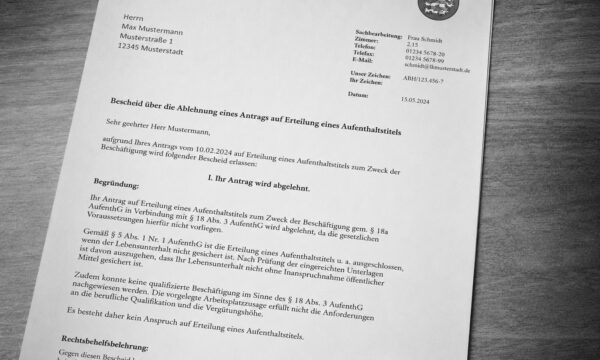
The Foreigners’ Registration Office may deport a foreign national if their presence in the country jeopardizes public safety and order, the free democratic basic order, or other significant interests of the Federal Republic of Germany. In practice, the most common grounds are: criminal convictions above a certain threshold, violations of the Narcotics Act (BtMG), and classifications as a threat to public safety. In each individual case, however, the authorities must exercise their discretion—considering length of stay, family ties, integration efforts, health, and children.
Deportation: An Overview of the Legal Consequences
- Expiration of the residence permit pursuant to § 51(1)(5) of the Residence Act.
- An order to leave the country, with a specified departure deadline (usually seven to thirty days).
- Entry and residence ban under § 11 of the Residence Act — temporary; the period begins upon departure or removal.
- Entry in the Schengen Information System (SIS) — effective throughout the Schengen Area.
- Possible loss of acquired rights (settlement permit, EU long-term residence permit).
Expulsion Synonym — Terms in Practice
In everyday language, deportation is sometimes confused with related terms: removal (enforcement of the obligation to leave the country through government measures), extradition (the transfer of a person to another country for criminal proceedings), and refusal of entry (denial of entry at the border). Legally, these are four distinct scenarios—we will clarify during the initial consultation which of these applies to your specific situation.
Deportation from Germany — who is affected?
In principle, any foreign national may be deported—including those who have resided in Germany for a long time, hold a settlement permit, or are married to a German citizen. Protection against deportation is graded: The longer the stay, the stronger the family ties in Germany, and the more significant the integration efforts, the higher the requirements placed on the public interest in deportation (Section 55 of the Residence Act). Special protective provisions apply to individuals with German family members or compelling interests worthy of protection.
What is deportation? — An overview of Sections 58 et seq. of the Residence Act
Deportation is the state’s enforcement of the obligation to leave the country—the compulsory termination of the stay of a foreign national who has not left voluntarily. Deportation and deportation proceedings are governed by Sections 58 et seq. of the Residence Act. While expulsion is the legal act that establishes the obligation to leave the country, deportation is the actual enforcement action.
What is deportation? — The definition
Deportation occurs when a person required to leave the country does not depart voluntarily and has been given a notice to leave within a reasonable period of time (Section 59 of the Residence Act). In practice, this means that the Foreigners’ Registration Office issues a deportation order with a deadline; if the deadline expires without the person leaving, the office may order the deportation to be carried out. The deportation itself is carried out by the competent police or enforcement authority—typically involving escort to the airport, handover to the flight crew, and return to the country of origin or a third country.
Deportation of Foreign Nationals — Who Is Specifically Affected?
Foreign nationals who are required to leave the country may be deported if their obligation to leave is enforceable and their deportation has not been suspended for legal or factual reasons. Common scenarios: Asylum seekers whose applications have been rejected after the rejection decision has become final, persons who have been expelled after the departure deadline has expired, persons whose residence permits have expired, and, in individual cases, persons involved in serious criminal offenses.
Who has the authority to order and carry out a deportation?
The competent immigration authority may order the deportation—in Munich, this is the KVR. In the context of asylum, the threat of deportation is typically issued together with the BAMF’s negative decision. The competent police or enforcement authority may carry out the deportation—in Bavaria, the Central Immigration Authority of the Government of Upper Bavaria has enforcement jurisdiction for more complex cases. Police escort is the responsibility of the Federal Police (for airport deportations) or the State Police (for domestic transfers).
When is deportation not legally permissible?
Even an order to leave the country that is enforceable in and of itself does not necessarily lead to deportation. It is not legally permissible if there is a prohibition on deportation under Section 60 of the Residence Act (AufenthG) —for example, because the recipient country poses a risk of political persecution, torture, or inhumane treatment, or because the individual has a serious illness that cannot be adequately treated in the recipient country. It is also not actually possible if the destination country does not issue travel documents or if the person’s identity has not been established—in such cases, deportation is suspended and a temporary stay permit is granted under Section 60a of the Residence Act (AufenthG).
The Difference Between Deportation and Expulsion — Short and Clear
In practice, the distinction between expulsion and deportation is often blurred—and this regularly leads to questions during counseling sessions. The legal distinction is clear: expulsion is the legal order to leave the country (an administrative act by the Foreigners’ Registration Office pursuant to Sections 53 et seq. of the Residence Act); deportation is the state’s enforcement of this obligation to leave (an enforcement measure pursuant to Sections 58 et seq. of the Residence Act).
In practice, this means that an expulsion may end without deportation if the person concerned leaves the country voluntarily. A deportation may take place without a prior expulsion if the obligation to leave exists for other reasons—such as a rejected asylum application or an expired residence permit. The difference between expulsion and deportation is therefore not merely a matter of terminology, but practically determines which procedural avenues are available: an objection and an action for annulment against the expulsion; an urgent application and interim legal protection against the actual deportation.
A third related measure is refusal of entry: this takes place at the border before the foreign national has entered the country (Section 15 of the Residence Act). From a legal standpoint, it does not constitute a termination of residence, but rather a prevention of entry—and, legally speaking, it precedes expulsion and deportation.
Emergency Protection Measures — When Deportation Is Imminent
"Protective measures" is a collective term for the legal tools that can be used to challenge an impending or already ordered deportation. They range from filing an emergency motion with the administrative court to asserting grounds for a deportation ban and appealing to the Hardship Commission. In urgent situations, the choice of the right protective measure—and its timely assertion—almost always determines the course of events.
Interim relief pursuant to § 80(5) of the Administrative Court Rules of Procedure (VwGO)
The most important means of preventing the enforcement of a deportation is an application for preliminary relief with the Munich Administrative Court under Section 80(5) of the Administrative Court Rules (VwGO). In practice, this means that if the authorities have ordered a deportation, the court can grant or reinstate the suspensive effect of the lawsuit—thereby halting the deportation until a decision is reached in the main proceedings. The prerequisite is that the prospects of success in the main proceedings are favorable or that there is a particular urgency for humanitarian reasons. In practice, we regularly file such motions within a few hours—the Munich Administrative Court has an on-call service for urgent cases.

Assertion of prohibitions on deportation under § 60 of the Residence Act
- Section 60 of the Residence Act (AufenthG) protects against deportation to a country where there is a risk of political persecution, torture, or inhuman or degrading treatment (Section 60(1) and (5) AufenthG), or where there is a substantial and concrete threat to life, limb, or liberty (Section 60(7) AufenthG). The provision also covers serious illnesses that cannot be adequately treated in the destination country. In every case, we examine whether grounds for a ban on deportation apply—and base our arguments on current situation reports from the Federal Foreign Office, reports from the UNHCR and Amnesty International, and specific medical expert opinions.
Bavarian Hardship Commission — the final authority for humanitarian hardship cases
If all legal avenues have been exhausted, filing a hardship case application with the Hardship Case Commission at the Bavarian State Ministry of the Interior, Sport, and Integration may be the last option for obtaining a residence permit in Germany. The Hardship Commission recommends to the Minister of the Interior that a residence permit be granted on humanitarian grounds (Section 23a of the Residence Act) if there are urgent humanitarian or personal reasons. Typical scenarios include: long-term residence with full integration, school-age children with a German educational background, or serious illnesses for which treatment is not available in the home country. The application is subject to strict formal requirements and involves a complex procedural process—we prepare hardship case applications with documented integration histories, school transcripts, medical certificates, and reports from social services.
Church asylum — a refuge in truly exceptional circumstances
Church asylum is not a legal concept but a de facto form of protection: A church congregation grants a person subject to deportation temporary shelter on its premises—typically as a temporary measure until the Federal Office for Migration and Refugees (BAMF) reviews the case again. The BAMF and the state interior ministries have agreed on procedural guidelines with the major churches that tolerate church asylum within strict limits. We provide advice on the strategic use of church asylum—when it makes sense as a bridge and how it can be combined with other protective measures.
Toleration as a de facto right to remain
Tolerated stay under Section 60a of the Residence Act temporarily suspends deportation—it is not a residence permit, but rather confirmation that deportation is temporarily impossible. There are various paths from tolerated stay to lawful residence: right-of-remain provisions for well-integrated youths and adolescents (Section 25a of the Residence Act), sustainable integration (Section 25b of the Residence Act), and the right of residence based on opportunity (Section 104c of the Residence Act). We work with our clients to determine which of these avenues is open to them in each individual case.
Request a free initial assessment
Tell us about your case—quickly and with no obligation. We’ll assess your chances of success and get back to you shortly.
or call us directly at: 089 540 239 0
FROM OUR PRACTICE – BAVARIAN HARD-CASE COMMISSION — THOROUGH PREPARATION
From our practice: A family with three children born in Germany, who had been living under temporary suspension of deportation following a lengthy asylum process that had been legally rejected, came to us to ask whether the Bavarian Hardship Commission was still an option. We prepared the hardship application with comprehensive documentation: school reports for all three children with grade point averages, medical certificates regarding the mother’s chronic illness, letters of recommendation from the school, kindergarten, and family doctor, and certificates documenting the father’s volunteer work at a Munich sports club. The Hardship Commission issued a recommendation; the competent authority granted a residence permit under Section 23a of the Residence Act.
We had to anonymize the case—§ 6 BORA (as amended)—and the reasoning behind this is clear: The Hardship Commission makes its decisions based on fully documented integration histories. Anyone who applies for hardship status with just a letter has little chance of success; anyone who submits a complete set of documents has a real chance.
Received a deportation order — Filed an objection and a lawsuit with the Munich Administrative Court
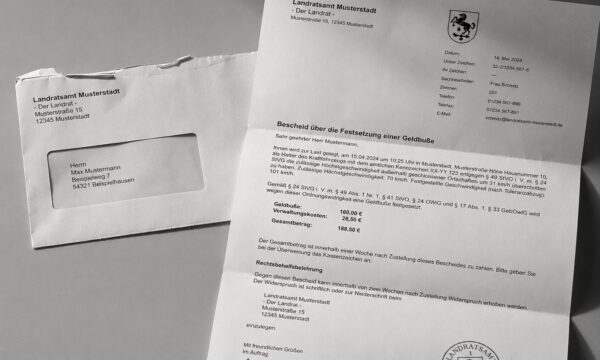
An expulsion order is the formal notice by which the immigration authorities order the expulsion. It is typically sent by mail with a certificate of service—and, in addition to the expulsion order, it also includes the duration of the entry and residence ban, the order to leave the country, and the threat of deportation. The decision must be substantiated; the reasoning reflects the discretion exercised by the authority. It is precisely this discretionary reasoning that can be challenged by a lawyer.
Objections and Actions to Set Aside — the Procedural Channels
An appeal may be filed against a deportation order, or a direct action to set aside the order may be brought—depending on state law. In Bavaria, an action to annul administrative acts of the Foreigners’ Registration Office must generally be filed directly with the Munich Administrative Court (filing deadline: one month from service). The action is usually combined with a motion for preliminary relief under § 80(5) VwGO, because the expulsion order is immediately enforceable.
What we review when defending against deportation orders
- Substantive legality — are the elements of the offense for deportation even met? In the case of criminal convictions: Does a serious offense within the meaning of the Residence Act exist?
- Exercise of discretion — did the authority take all relevant factors into account? Length of stay, family ties (particularly to German citizens or minor German children), efforts toward integration, and health status.
- Proportionality — Is the expulsion, in its chosen form (duration, length of the ban), proportionate?
- Protection under Article 6 of the German Basic Law and Article 8 of the European Convention on Human Rights — protective provisions under constitutional law and convention law apply to families with German family members or to those who have resided in Germany for many years and have established deep roots in the country.
Procedural errors — defects in the hearing process, lack of reasoning, defects in service.
FROM OUR PRACTICE – DEPORTATION ORDER FOLLOWING A CRIMINAL CONVICTION — THE USE OF DISCRETIONARY POWER AS A LEVER
From our practice: A client who had been residing in Germany for many years and was married to a German woman received a deportation order from the Munich Foreigners’ Registration Office following a conviction resulting in a prison sentence. The agency based its discretionary decision primarily on the criminal conviction—without giving sufficient consideration to the fact that the client had been living in Munich for over fifteen years, that the marriage had produced a minor German child, and that he had successfully completed therapy while in prison. We filed an action for annulment with the Munich Administrative Court, combined with an urgent motion pursuant to § 80(5) VwGO. The court reinstated the suspensive effect—the authority’s reasoning for its discretionary decision was incomplete because Article 6 of the German Basic Law (protection of marriage and family) and Article 8 of the European Convention on Human Rights (right to private and family life) had not been sufficiently taken into account.
We had to anonymize the case—§ 6 BORA (as amended)—and the logic behind this is clear: In deportation orders, the authority’s discretionary decision is the central point of contention. We review every decision to determine whether the authority has in fact taken all relevant factors into account—and has not merely emphasized the public interest in deportation in a one-sided manner.
“In cases involving deportation orders, the authority’s discretionary decision is the main point of contention. We review every decision to determine whether the authorities have actually considered all relevant factors—and not merely emphasized the public interest in deportation in a one-sided manner. In many cases before the Munich Administrative Court, the court overturns the deportation order because the reasoning behind the discretionary decision is incomplete. This is not the end of the dispute with the authorities, but it buys time—and time is often the most important factor in immigration law.”
— Marc Frey, attorney specializing in administrative proceedings and litigation at the Munich Administrative Court
Prohibitions on Deportation Under Section 60 of the Residence Act — When Deportation Is Not Legally Permissible
- Section 60 of the Residence Act is the key provision governing prohibitions on deportation under German residence law. It prevents a person who is required to leave the country from being deported to a state where they would face persecution, torture, inhuman treatment, or a substantial and concrete risk of such treatment. The provision is divided into several paragraphs, each of which sets out different levels of protection and requirements.
§ 60(1) of the Residence Act — Protection from Persecution
- Section 60(1) of the Residence Act protects persons who face a risk of persecution in the country of destination on grounds of race, religion, nationality, political opinion, or membership in a particular social group. This provision implements the substantive standards of the Geneva Convention on Refugees and the EU Qualification Directive. In asylum proceedings, it is routinely assessed by the Federal Office for Migration and Refugees (BAMF); in residence permit proceedings, it may be invoked independently if an asylum application cannot be filed or is no longer possible.
§ 60(5) of the Residence Act — Protection under the ECHR
- Section 60(5) of the Residence Act refers to the European Convention on Human Rights—in particular Article 3 of the ECHR (prohibition of torture and inhuman treatment). The provision applies if deportation to the destination country would result in treatment incompatible with Article 3 of the ECHR. This may be the case in the event of non-state persecution, the threat of violence by non-state actors, or extreme humanitarian conditions in the destination country.
§ 60(7) of the Residence Act — Prohibition on Deportation Due to Illness
- Section 60(7) of the Residence Act provides protection against deportation if there is a significant and concrete risk to life, limb, or liberty. In practice, this is particularly relevant in cases of serious illnesses that cannot be adequately treated in the destination country—ranging from severe diabetes and oncological diseases to psychological trauma with a risk of suicide. Asserting this right requires detailed medical certificates with clear statements regarding treatment needs, medication availability, and the specific risk situation.
Procedure for Filing a Claim
Prohibitions on deportation under Section 60 of the Residence Act (AufenthG) are reviewed by the Federal Office for Migration and Refugees (BAMF) during the asylum proceedings. If no asylum application is (any longer) pending, the prohibition on deportation may be asserted with the Foreigners’ Registration Office—if necessary, in conjunction with a request for a stay of deportation (Section 60a AufenthG). In urgent cases, the prohibition on deportation is also reviewed as part of the application filed under Section 80(5) of the Administrative Court Procedure Act (VwGO) with the Munich Administrative Court. We prepare the claim by compiling current situation reports, medical opinions, and, where applicable, reports from international human rights organizations.
FROM OUR PRACTICE – PROHIBITION OF DEPORTATION DUE TO ILLNESS — THE BURDEN OF PROOF
From our practice: A client from a West African country of origin, whose asylum application had been definitively rejected, suffered from a severe form of diabetes mellitus with associated complications. The authorities had denied her request for a medical exemption from deportation under Section 60(7) of the Residence Act (AufenthG), arguing that insulin was “generally available” in her home country. We prepared a new application with a detailed statement from the treating diabetologist—including specific information on the required medication, the necessity of continuous monitoring, and the foreseeable health consequences of inadequate care. We also included current reports from the Federal Foreign Office and the WHO regarding the actual availability of specific forms of insulin in the country of origin. The Munich Administrative Court granted the ban on deportation under Section 60(7) of the Residence Act.
We had to anonymize the case—§ 6 BORA (as amended)—and the reasoning behind this is clear: In cases involving medical grounds for a ban on deportation, the substance of the medical opinion is decisive. General medical certificates are not sufficient; what matters are specific details regarding medication, follow-up care, and potential risks in the destination country.
Lawyer for Refugees and Asylum Seekers — Representation in Asylum Proceedings and After a Denial
Anyone seeking a refugee lawyer in Munich will, in most cases, be dealing with one of two scenarios: a negative decision by the Federal Office for Migration and Refugees (BAMF) in the asylum proceedings, or the termination of residency following the conclusion of the asylum proceedings. At KLAMERT & PARTNER, we handle asylum and refugee cases as part of our practice focusing on immigration law—with a particular emphasis on a factual, evidence-based defense.

Asylum Attorney — The Deadline for Filing a Lawsuit Following a BAMF Decision
Following a negative decision by the Federal Office for Migration and Refugees (BAMF), the deadline for filing a lawsuit is two weeks from the date the decision is served—and just one week for applications that are clearly unfounded. These deadlines are not extended. In urgent cases, we file asylum lawsuits with the Munich Administrative Court within a few hours of being retained—along with a motion for preliminary relief if the decision is immediately enforceable.
Asylum Law — The Basics
At its core, the right to asylum involves the granting of protection against political persecution—enshrined in the Constitution under Article 16a of the Basic Law (GG) and specified in the Asylum Act (AsylG). In addition, there is refugee status under the Geneva Convention on Refugees (Section 3 of the Asylum Act), subsidiary protection (Section 4 of the Asylum Act), and national prohibitions on deportation (Section 60(5) and (7) of the Residence Act). The asylum procedure is conducted by the Federal Office for Migration and Refugees (BAMF)—the Munich branch is located on Boschetsrieder Straße. Appeals against negative decisions must be filed with the Munich Administrative Court.
What is a recognized refugee? — Rights
A recognized refugee within the meaning of § 3 of the Asylum Act (AsylG) receives a residence permit pursuant to § 25(2) of the Residence Act (AufenthG). Recognition entails significant rights: family reunification without proof of language proficiency, access to the labor market, a travel document for refugees, and, after three years, a settlement permit if the requirements are met. Persons granted subsidiary protection (Section 4 of the Asylum Act) also receive a residence permit pursuant to Section 25(2) of the Residence Act, though with rights that differ in some respects—in particular, family reunification is subject to a monthly quota (Section 36a of the Residence Act).
Legal Fees for Asylum Proceedings — What You Need to Know
Legal fees in asylum proceedings are based on the RVG fee schedule—the value in dispute in asylum proceedings is set by law. Legal aid may be available in cases of financial need (see Section 10 of this page). We provide an initial assessment free of charge—especially in urgent cases with a short filing deadline.
Request a free initial assessment
Tell us about your case—quickly and with no obligation. We’ll assess your chances of success and get back to you shortly.
or call us directly at: 089 540 239 0
Consultations in Ukrainian and Russian — Denys Osypenko
At KLAMERT & PARTNER, we have a legal professional on staff, Denys Osypenko, who assists clients in Ukrainian and Russian. Denys Osypenko is from Ukraine and is a trained lawyer. He is not admitted to practice as an attorney under German law—this clarification is legally important (in compliance with the RDG) and means, in practical terms: The legal handling of Ukrainian- or Russian-speaking cases involving expulsion, deportation, and protective measures is carried out by the licensed attorneys Markus Klamert, Marc Frey, and Johannes Goetz. Letters to the Foreigners’ Registration Office, the Federal Office for Migration and Refugees (BAMF), lawsuits filed with the Munich Administrative Court, and urgent motions are signed exclusively by licensed attorneys.
This offers a practical advantage when it comes to residency law. Ukrainian clients living in Munich with status under Section 24 of the Residence Act (AufenthG) who have received a notice to leave or a deportation order want to understand the facts of their case and their options in their native language. Russian-speaking clients often come from various countries—Russia, Belarus, Kazakhstan, Uzbekistan, and Israel—and bring with them different home-country situations and, in some cases, circumstances relevant to persecution. Here, too, the linguistic bridge is crucial, because a precise description of the facts forms the basis for applications for protection against deportation and asylum claims.
Here’s how it works: You describe your case to us in Ukrainian or Russian—either by phone or during an initial consultation at Heimeranstraße 37. Denys Osypenko will systematically document the facts and lay out the legal strategy. One of our licensed attorneys will take charge of your case; for cases involving deportation and removal, this is typically Markus Klamert or Marc Frey. Language support doesn’t solve every case on its own—but it ensures that nothing falls through the cracks due to translation and that you understand what your attorney is doing, especially in a situation where every hour counts.
“In cases where deportation is imminent, language is not a matter of convenience but a prerequisite for effective legal protection. Anyone who needs to describe a situation of persecution in their home country must be able to do so in their native language—not in a rudimentary form of English learned in school. My job is to conduct the initial conversation in Ukrainian or Russian—and, together with the licensed attorneys Klamert, Frey, and Goetz, to define the next concrete step within a few hours. In urgent cases, this means filing an emergency motion with the Munich Administrative Court; in cases of hardship, it involves preparing a hardship application to the Bavarian Ministry of the Interior.”
— Denys Osypenko, attorney (not admitted to practice in Germany), client services in Ukrainian and Russian
Costs and Legal Aid — Attorney's Fees in Asylum Proceedings and Litigation
Cases involving deportation, removal, and protective measures are often urgent—and are frequently brought by clients who cannot afford to pay high legal fees upfront. We discuss costs transparently during the free initial consultation—and help determine whether you are eligible for legal aid.
Legal Fees for Asylum Seekers and Asylum Proceedings
Legal fees in asylum proceedings are based on the RVG fee schedule—the value in dispute is defined by law as a fixed amount (§ 30 RVG, currently 5,000 EUR). This results in procedural fees for filing the complaint with the administrative court and for the oral hearing. The total fee typically falls in the low four-digit range—depending on the duration and complexity of the proceedings. Legal aid may be available for those in financial need.
Legal Aid for Asylum Proceedings — Who Is Eligible?
Legal aid (PKH) is granted by the Administrative Court if the lawsuit has a reasonable chance of success and the applicant, given their personal and financial circumstances, is unable to cover the costs of litigation or can only do so in installments (Section 114 of the Code of Civil Procedure (ZPO) in conjunction with Section 166 of the Administrative Court Rules (VwGO)). The PKH application is filed together with the complaint and supported by a statement regarding the applicant’s personal and financial circumstances. We submit the PKH application in most asylum cases—if approved, the state treasury covers the attorney’s fees.
Legal aid for refugees and in asylum law
Legal aid may also be available for appeals against decisions by immigration authorities—such as deportation orders or the revocation of residence permits. The requirements are the same as in asylum proceedings: a reasonable chance of success and financial need. The threshold for a reasonable chance of success is not high—a preliminary review is sufficient. This makes it possible to secure legal representation even for those in difficult financial circumstances.
Fees for cases not eligible for legal aid
If neither PKH applies nor does legal expenses insurance provide coverage, we will negotiate a customized fee agreement. We will discuss the fee transparently before you retain our services. In urgent cases, we will file an emergency petition even without a final fee agreement—the retainer agreement will then be drawn up as usual once the immediate danger has been averted.
“For clients in asylum and deportation cases, the issue of legal fees is often the second concern after the question of whether they can stay. We take this seriously. Legal aid is the norm, not the exception, in many of our cases—and we prepare the legal aid application with the same care as the lawsuit itself. For those facing financial hardship, the guaranteed right to a fair hearing is not a given, but rather depends on the quality of the application.”
— Johannes Goetz, Attorney at Law, specializing in administrative proceedings related to immigration law
How Your Immigration Lawyer in Munich Works — Four Steps
1. Free initial assessment — within a few hours in urgent cases
Please describe your situation to us—by phone at 089 540 239 0, via the contact form, or in person at Heimeranstraße 37. In urgent cases (imminent deportation within the next few days, or a short deadline for filing a lawsuit following a BAMF decision), we will get back to you within a few hours, even outside of office hours. Languages: German, English, Ukrainian, Russian, Portuguese. This phase is free of charge.
2. Review of case files and strategy development
Once retained, we immediately request access to the case files from the relevant authority—the Munich Foreigners’ Registration Office, the Federal Office for Migration and Refugees (BAMF), or the Administrative Court. We review the facts of the case, the reasoning behind the discretionary decision, the course of the proceedings, and the evidence. During this phase, we develop the defense strategy: filing an objection or a direct lawsuit, filing an expedited motion under § 80(5) VwGO, asserting grounds for a ban on deportation, and, if applicable, filing a hardship case application.
3. Legal representation — Lawsuits, motions for summary judgment, motions for relief on grounds of hardship
We will file the necessary pleadings with the Munich Administrative Court and represent you at the hearing. If deportation is imminent, the summary proceedings run parallel to the main proceedings—in cases with a good chance of success, the court may already order a stay of execution in the summary proceedings. For pending hardship case applications, we coordinate with the office of the Hardship Commission and prepare supplementary documents as needed.
4. Follow-up proceedings and consolidation of residency
Once the proceedings have been successful, we assist with the next steps: issuance or renewal of the residence permit by the Munich Foreigners’ Registration Office; if applicable, a change to a different type of residence permit; and, in the medium term, a settlement permit and naturalization. If the main proceedings are denied, we will consider filing an appeal with the Bavarian Administrative Court or a petition for review with the Federal Administrative Court—depending on the prospects of success and the procedural situation.
Request a free initial assessment
Tell us about your case—quickly and with no obligation. We’ll assess your chances of success and get back to you shortly.
or call us directly at: 089 540 239 0
Frequently Asked Questions About Deportation, Removal, and Protective Measures
What is deportation?
Expulsion is an official order requiring a foreign national to leave the country, as provided for in sections 53 et seq. of the Residence Act (AufenthG). It terminates the residence permit and triggers a deadline for departure; as a rule, it is accompanied by a temporary ban on entry and residence pursuant to section 11 of the Residence Act (AufenthG). Expulsion is a discretionary decision—the interest in remaining and the interest in expulsion are weighed against one another.
What is deportation?
Deportation is the state’s enforcement of the obligation to leave the country—the compulsory termination of the stay of a person who is required to leave but does not do so voluntarily. Deportation and the relevant procedures are governed by sections 58 et seq. of the Residence Act. The prerequisites are an enforceable obligation to leave the country and a notice of deportation issued with reasonable notice.
What is the difference between expulsion and deportation?
Expulsion is the legal act that establishes the obligation to leave the country (administrative act pursuant to § 53 et seq. of the Residence Act). Deportation is the state’s enforcement of this obligation to leave the country (enforcement measure pursuant to Sections 58 et seq. of the Residence Act). An expulsion may end without deportation if the person leaves voluntarily; a deportation may take place without an expulsion if the obligation to leave the country exists for other reasons (for example, following a rejected asylum application).
What does "reported" mean?
Expulsion refers to a situation in which the Immigration Authority has issued a formal notice requiring a foreign national to leave the country. Expulsion results in the revocation of residence permits and associated rights; it triggers a deadline for departure and typically leads to a temporary ban on entry and residence.
What is a deportation order?
An expulsion order is the formal decision by which the Foreigners’ Registration Office orders the expulsion. It contains the expulsion order, the duration of the entry and residence ban, the order to leave the country, and the threat of deportation. In Bavaria, an action for annulment may be filed against the expulsion order with the Munich Administrative Court—the deadline for filing is one month from the date of service.
How can I prevent an impending deportation?
The most important legal remedy is a motion for preliminary relief under Section 80(5) of the Administrative Court Procedure Act (VwGO) filed with the Munich Administrative Court. In addition, one may assert a prohibition on deportation under Section 60 of the Residence Act (AufenthG), file a motion to suspend deportation under Section 60a of the Residence Act (tolerated stay), and, if applicable, submit a hardship case application to the Bavarian Hardship Case Commission. In any case: seek legal advice promptly, as urgent motions typically must be filed within a few hours of learning the deportation date.
How much does a lawyer cost in an asylum proceeding?
Legal fees in asylum proceedings are based on the RVG fee schedule, which is determined by the statutory value of the matter. In practice, the costs typically range in the low four-digit range per case. If you are financially in need, you may be eligible for legal aid—we will file the legal aid application along with the complaint.
What is legal aid in asylum proceedings?
Legal aid (PKH) is granted by the Administrative Court if the lawsuit has a reasonable chance of success and the applicant is unable to cover the legal costs (Section 114 of the Code of Civil Procedure (ZPO) in conjunction with Section 166 of the Administrative Court Rules (VwGO)). If granted, the state treasury covers the attorney’s fees. PKH is the standard mechanism for ensuring legal representation in asylum and residency proceedings.
Are there any free lawyers for refugees?
Legal representation is not free under German law—but the costs may be covered by the state through legal aid (PKH) if the eligibility requirements are met. In addition, there are counseling centers in Munich, such as the migration counseling services offered by Caritas, Refugio München, and the Bavarian Refugee Council, which provide free initial consultations and, if necessary, assistance with filing applications—legal representation in court proceedings is provided by licensed attorneys with PKH or on a standard fee basis.
What is the Bavarian Hardship Commission?
The Hardship Commission is part of the Bavarian State Ministry of the Interior, Sport, and Integration. It may recommend to the Minister of the Interior that a residence permit be granted on humanitarian grounds (Section 23a of the Residence Act) to a person required to leave the country if there are compelling humanitarian or personal reasons. The Commission is the final authority once all legal avenues have been exhausted.
What is a ban on deportation under Section 60 of the Residence Act?
- Section 60 of the Residence Act protects foreign nationals from being deported to a country where they would face persecution (Section 60(1)), torture, inhuman or degrading treatment (Section 60(5) in conjunction with Article 3 of the ECHR), or a substantial and concrete threat to life, limb, or liberty (Section 60(7))—including for health reasons, if adequate treatment is not available in the destination country.
What is a "Duldung"?
Toleration under Section 60a of the Residence Act temporarily suspends deportation—it is not a residence permit, but rather a confirmation that deportation is temporarily impossible. Toleration opens pathways to lawful residence—provisions on the right to remain for well-integrated young people (Section 25a of the Residence Act), sustainable integration (Section 25b of the Residence Act), and the right of residence based on opportunity (Section 104c of the Residence Act).
Free initial assessment — even in urgent cases, within a few hours
Tell us about your situation—we’ll assess, with no obligation, what protective measures are available, what legal avenues are open to you, and whether you qualify for legal aid. Contact us online via our contact form, by phone at 089 540 239 0, or in person at Heimeranstraße 37 in Munich. Languages: German, English, Ukrainian, Russian, Portuguese. If you are facing imminent deportation in the coming days, if the deadline for filing a lawsuit following a BAMF decision is imminent (asylum: two weeks; one week for manifestly unfounded applications), or if the deadline for challenging an expulsion order is approaching (one month), we will get back to you within a few hours—even outside of office hours. Cases involving expulsion, deportation, and protective measures at KLAMERT & PARTNER are handled through our Immigration Law Hub—responsible partners: Markus Klamert, Marc Frey, and Johannes Goetz. Initial consultations in Ukrainian and Russian are provided by our legal advisor Denys Osypenko; legal representation is handled by our licensed attorneys.