Attorney for Administrative Proceedings
in Immigration Law, Munich
Select your preferred language
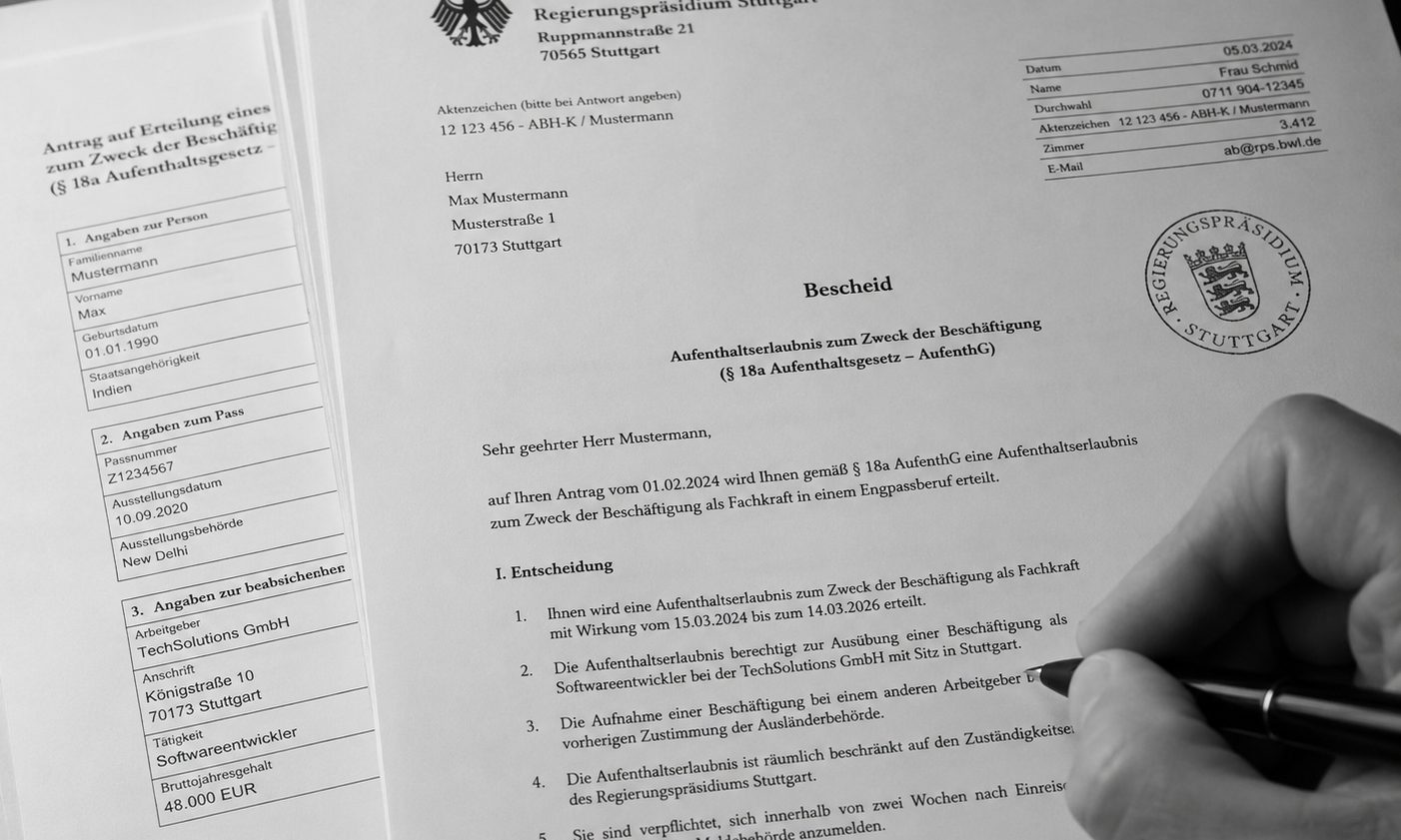
Administrative procedures and legal remedies are the invisible driving force behind immigration law—clients only realize what’s at stake when things come to a standstill. The residence permit expires on the 30th, but the renewal appointment at the Munich Regional Immigration Office (KVR) isn’t for another four months—so a provisional residence permit is issued. The naturalization application has been pending with the authorities for 18 months without a response—so we file an action for failure to act with the Munich Administrative Court. The visa decision is denied—so we file an action to challenge the decision and, if necessary, an urgent motion with suspensive effect pursuant to § 80(5) VwGO. At KLAMERT & PARTNER, we have been providing legal counsel since 1987—as attorneys specializing in administrative proceedings under immigration law in Munich, we guide clients through the entire chain of authorities between the client and the immigration office: provisional residence certificate under Section 81 of the Residence Act (AufenthG), extension of the residence permit, appeals and actions to annul, actions for failure to act in cases of excessive processing delays, and applications for expedited proceedings in the event of imminent deportation. Languages spoken: German, English, Ukrainian, Russian, Portuguese. Initial consultation free of charge.
When do you need a lawyer for administrative proceedings under immigration law?
Administrative proceedings under immigration law are handled in Munich at a single central location: the District Administrative Office (KVR), Immigration Division, at Ruppertstraße 19. This is where residence permits are issued, extended, and revoked; where provisional residence certificates are issued when the processing time is too short; and where the decisions are issued that are later subject to appeals or legal challenges. Anyone familiar with the procedures at the KVR in Munich is also familiar with the typical pitfalls—and that is precisely what we, as attorneys specializing in administrative proceedings under immigration law in Munich, are here to handle.
Three types of clients typically come to us. First, clients whose residence permits are about to expire and whose renewal appointments at the Munich Foreigners’ Registration Office (KVR) are not scheduled for several weeks or months—they need the provisional residence permit under Section 81 of the Residence Act (AufenthG) to remain in Germany legally without interruption. Second, clients whose applications have been pending with the Foreigners’ Registration Office for months without a response—in these cases, we explore the option of filing an action for failure to act with the Munich Administrative Court. Third, clients who have received a denial notice—in these cases, we prepare an appeal or an action to challenge the decision and assess whether an urgent application with suspensive effect is necessary.
This cross-functional role makes the “Administrative Procedures & Legal Remedies” spoke the central hub of the Immigration Law Hub. Whether you initially came to us for naturalization, family reunification, a settlement permit, or business immigration —if the process stalls, your case will be handled through this spoke.
FROM OUR PRACTICE – OBSERVATION AT THE KVR IN MUNICH
At the Munich KVR (Ruppertstraße 19, Foreigners’ Affairs Division), we have observed a clear pattern since the 2024 StAG reform and the Skilled Workers Immigration Act 2.0: Applications have increased, and so have processing times. In Munich, appointments for residence permit renewals are currently sometimes not scheduled until three to six months after the request is submitted. From our experience: Those who apply for a provisional residence permit in a timely manner avoid the gap between an expired permit and a new decision—and thus all resulting residency-related problems, including those related to social security. We had to anonymize this case—§ 6 BORA (as amended)—but the logic behind it shows that administrative procedures in immigration law require advance preparation. Anyone who waits until the permit has expired will face several weeks of additional effort.
Typical issues that clients bring to us in administrative proceedings under immigration law:
- My residence permit expires on the 30th, but my KVR appointment isn't for another two months—how does the provisional certificate work?
- My certificate of fictitious employment expires on Friday—what should I do?
- I applied for naturalization 14 months ago and haven't heard anything from the KVR—should I consider filing a lawsuit for failure to act?
- My application for an extension was denied—should I file an appeal or go straight to court?
- My visa application was denied—how can I sue the diplomatic mission?
- I'm facing a denial of my application and deportation —will the motion for a stay of execution be granted?
- I provided false information to the immigration office without verifying it—what are the consequences?
- The agency hasn't responded to my letters for two months—is there anything I can do?
“In immigration law, administrative proceedings are the area where most cases are won—not through brilliant legal arguments, but through meticulous record-keeping and strict adherence to deadlines. Any lawyer working at the Munich Regional Immigration Office (KVR) knows this: A decision received today almost always depends on a letter sent six weeks ago. This is administrative routine, not a drama—but that is precisely why it is so stressful for clients without legal representation.”
— Markus Klamert, attorney and founder of KLAMERT & PARTNER
Certificate of Fictitious Employment under Section 81 of the Residence Act — What You Need to Know
The provisional residence permit is the most important tool under German residence law when there is a “tight” transition between two residence permits. It is provided for in Section 81(3) and (4) of the Residence Act (AufenthG) and bridges the gap between the submission of an application and the issuance of a decision. In practice, this means that anyone who submits an application for renewal or a follow-up application in a timely manner before their existing residence permit expires is considered to be “still lawfully present” under residence law until the authorities make a decision—the provisional certificate documents this status.
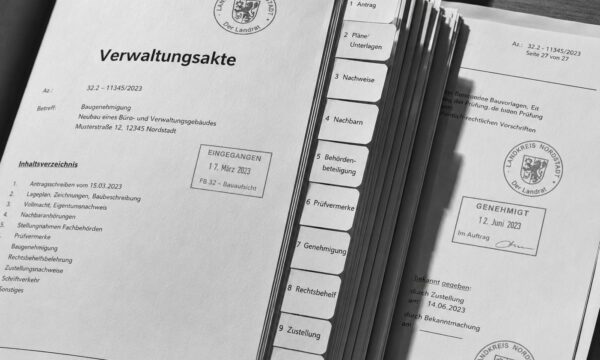
Certificate of Fictitious Status, Section 81(3), first sentence, of the Residence Act (AufenthG)
- Section 81(3), first sentence, of the Residence Act (AufenthG) applies when a person is lawfully residing in Germany (for example, with a Schengen visa or visa-free) and applies for a residence permit before the permitted period of stay expires. The stay is considered authorized until the Foreigners’ Registration Office issues a decision. This form of provisional residence permit is particularly relevant in Munich for third-country nationals who are seeking a residence permit after 90 days of visa-free stay in Germany.
Certificate of Fictitious Status, Section 81(4) of the Residence Act — The Standard Case
- Section 81(4) of the Residence Act (AufenthG) is the most common scenario and by far the most frequent client concern in administrative procedure consulting: Anyone who holds an existing residence permit and applies for an extension before it expires is automatically considered to retain that status—until the decision is issued. The provisional certificate is generally issued by the Munich Foreigners’ Registration Office (KVR); it replaces the actual residence permit for the transitional period and entitles the holder to engage in gainful employment, provided the original permit did so as well. Important: The application must be filed before the permit expires. Anyone who applies even one day late loses the provisional status and is left “in limbo” with regard to residence law.
Fiction Certificate Has Expired — What Should I Do?
“Provisional certificate has expired” is a common inquiry we hear every week at the consultation desk in Munich. Here’s the background: The provisional certificate is typically issued for three or six months; if the Foreigners’ Registration Office does not make a decision within that period, the certificate formally expires. In practice, this is almost always an administrative issue, not a legal one: The authorities will issue an extension of the provisional residence permit if the application is still being processed. We coordinate this with the KVR Munich—if necessary, with a letter from an attorney that establishes the current status of the case and makes the next permit deadline binding.
Fiction Certificate Costs
The fee for the provisional residence permit at the KVR in Munich is in the low double digits—in many renewal scenarios, it is effectively included in the residence permit fee. Significant costs arise only when legal representation is required—such as when the appointment must be rescheduled, the authorities issue additional demands, or the provisional residence permit must be extended retroactively.
Employment with a Provisional Certificate
A provisional residence permit allows the holder to work only if the original residence permit also permitted employment. When the purpose of residence changes (for example, from studying to employment), the work authorization is often not continuous during the transition period—we review the specific circumstances and, if necessary, speak with the employer. In Munich’s tech and pharmaceutical sectors, this transition issue comes up practically every week.
FROM OUR PRACTICE – FICTITIOUS CERTIFICATION UNDER TIME PRESSURE
For a client in Munich’s tech sector, the residence permit expired on a Thursday; the renewal appointment at the Munich KVR was scheduled for the following Tuesday. From our experience: It is precisely in situations like this that the provisional certificate is relevant not only legally but also economically—social security, health insurance, and employment status all depend on uninterrupted residence status. We prepared the appointment so that the provisional certificate was issued on Tuesday, the same day as the renewal application—ensuring continuous status with no gap. We had to anonymize the information—§ 6 BORA (as amended)—but practical experience shows: Anyone who comes to a lawyer four weeks before their status expires almost always has a smooth transition. Anyone who comes three days before expiration has a case that requires improvisation.
Extending Visas and Residence Permits in Munich — Procedures at the KVR
The renewal of residence permits in Munich is handled by the KVR Munich, Foreigners’ Affairs Division, located at Ruppertstraße 19. The application is typically submitted about three months before the current permit expires. The appointment itself is scheduled online through the Munich Citizens’ Office portal—and that is precisely where the bottleneck currently lies.
When do I need to renew my residence permit?
The application for renewal must be submitted no later than the day the existing permit expires in order for the deemed validity under Section 81(4) of the Residence Act to take effect. In practice, we recommend scheduling an appointment eight to ten weeks before the expiration date and submitting the application three to four weeks before the expiration date. If you are unable to secure an appointment until later, you should at least submit the application in writing before the expiration date—you can make up the in-person appointment later.

What documents do I need to renew my visa?
Standard documents required for renewing a residence permit: valid passport, biometric photo, registration certificate, lease agreement and confirmation of living space, proof of health insurance, proof of sufficient funds (three months of pay stubs, employment contract, tax assessment notice), and, if applicable, a language certificate and additional documentation depending on the purpose of stay. For students: certificate of enrollment; for self-employed individuals: business analysis report (BWA) and Chamber of Commerce (IHK) statement; for family members: marriage certificate or birth certificate. We check that all documents are complete before the appointment—missing documents often lead to requests for additional information, which can delay the process by weeks.
Residence permit has expired—what should I do?
“Residence permit expired—what to do” is a search query from Munich that we see several times a month. Anyone who submitted the renewal application in a timely manner before the expiration date is protected by the deemed validity provision of Section 81(4) of the Residence Act (AufenthG). Anyone who submits the application only after the expiration date is legally in an unlawful status—until a decision is issued. In such situations, we examine the possibility of filing a motion to reinstate the application due to a missed deadline through no fault of the applicant, clarify the status of the case with the Munich Foreigners’ Registration Office (KVR), and, if necessary, work with hardship provisions. Important: Even after the permit has expired, leaving the country and re-entering with a visa application from your home country is almost always the worse option—we try to find a solution right here in Munich.
Extending a German Visa — A Special Case
For national visas (D visas)—typically issued for family reunification, study, or employment—the transition to a residence permit is automatic. The national visa is not “extended” in Munich, but rather converted into a residence permit. Anyone who has received a national visa valid for 90 days should apply for a residence permit at the KVR Munich within that period. For tourist visas (Schengen, Type C), an extension in Germany is possible only in extremely rare cases—the standard procedure is to depart the country before the 90-day period expires.
Request a free initial assessment
Tell us about your case—quickly and with no obligation. We’ll assess your chances of success and get back to you shortly.
or call us directly at: 089 540 239 0
Action for Failure to Act — When the Immigration Office Fails to Make a Decision
Under Section 75 of the Administrative Court Rules of Procedure (VwGO), an action for failure to act is the formal means of compelling a delinquent authority to render a decision. It is currently being used particularly frequently in Munich’s immigration law context because processing times at the Munich Foreigners’ Registration Office (KVR) and at German diplomatic missions abroad have increased significantly since the 2024 StAG reform and the Skilled Workers Immigration Act 2.0.
When is an action for failure to act admissible?
The minimum waiting period under § 75, sentence 2, of the VwGO is three months from the date the application was filed. However, in Munich administrative court practice, we recommend filing a lawsuit no earlier than after 12 to 15 months without any serious progress on the case—the Munich Administrative Court examines whether there was a “sufficient reason” for the delay and often grants the agency a reasonable processing period during the initial phase. Experience shows that if 18 months or more have passed without any substantive action, the lawsuit has a very good chance of success.
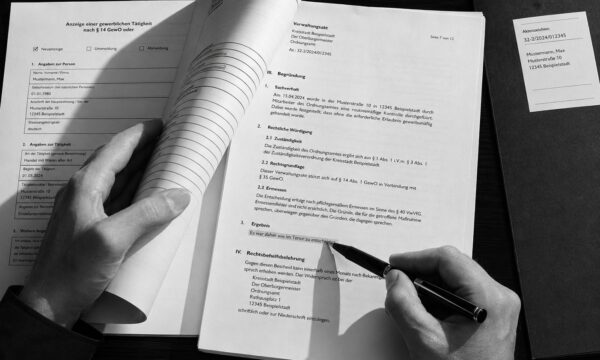
How does an action for failure to act work?
In Munich’s administrative practice, an action for failure to act almost always takes effect even before a judgment is rendered. In many cases, the Foreigners’ Registration Office issues a decision within a few weeks of the filing of the complaint—either granting or denying the request. Once the decision is issued, the inaction is resolved; the complaint can be declared settled, and the Munich City Council (KVR) typically bears the costs of the proceedings. A court ruling on the action for failure to act is then rarely necessary—the pressure exerted by the mere filing of the complaint is usually sufficient.
Action for Failure to Act Regarding Naturalization
Since 2024, the action for failure to act against the Munich KVR in naturalization proceedings has likely been the most important single tool in immigration law—waiting periods of 18 to 24 months are the norm there. A detailed discussion can be found on our Naturalization Spoke; the procedural rules set forth in that Spoke apply.
Action for Failure to Act Against German Diplomatic Missions Abroad
In visa proceedings against German diplomatic missions abroad, jurisdiction lies not with the Munich Administrative Court but with the Berlin Administrative Court (which has territorial jurisdiction over all diplomatic missions worldwide). We file actions for failure to act regarding family reunification visas, business visas, and other national visas with the Berlin Administrative Court, but we coordinate the handling of these cases from Munich.
How much does an action for failure to act cost?
Court fees are based on the amount in dispute (typically between €5,000 and €10,000 in immigration law), while attorneys’ fees are determined in accordance with the RVG. If the case is successful, the agency bears the costs of both parties. If the matter is resolved by an interim decision, the allocation of costs is determined on a case-by-case basis—in Munich practice, the authorities generally bear the costs if the delay was significantly longer than twelve months. We discuss the cost risk openly before filing a lawsuit.
FROM OUR PRACTICE – ACTION FOR FAILURE TO ACT AT THE MUNICH ADMINISTRATIVE COURT
Since 2024, the Munich Administrative Court, located at Bayerstraße 30, has seen a significant increase in the number of actions for failure to act under immigration law—primarily in naturalizationand residence permit proceedings. Observation from our practice: In cases where applications have been pending for more than 18 months without any substantive progress, the Munich Regional Administrative Court (KVR) often issues a decision within a few weeks of the complaint being served—the pressure created by the formal filing of the complaint has a faster effect than the judgment itself. We had to anonymize the case—§ 6 BORA (as amended)—but the logic is clear: an action for failure to act and simultaneous optimization of the application go hand in hand. Those who merely file a lawsuit without having a lawyer review and revise the application will receive a decision more quickly—but not necessarily a favorable one.
“My favorite line in administrative procedure cases: ‘I’ve been waiting 14 months already, and the KVR hasn’t gotten back to me.’ This is exactly where the leverage lies. Administrative law has deadlines—three months is the formal minimum for filing an action for failure to act, and after twelve months without serious consideration, it becomes the most effective tool of all. Any lawyer working in administrative law in Munich who doesn’t mention the action until after a three-year waiting period has left the most important tool unused for two years.”
— Marc Frey, Attorney at Law, specializing in contract and property law (with experience in administrative law related to immigration)
Appeals Against Decisions by the Immigration Office
In classical administrative law, an “objection” is the formal legal remedy against an administrative act—prior to filing an action for annulment. In Bavarian administrative law, however, the objection procedure has been abolished in many areas. In immigration law, this means in practice that objections are no longer admissible against most decisions issued by the Munich Immigration Office—instead, an action for annulment must be filed directly with the Munich Administrative Court.
When is an objection still admissible?
Under federal law, the right to file an objection is retained in some cases—particularly for decisions that have not been converted into an action for annulment under state law. In Munich’s immigration law practice, this is the exception; the standard approach is to file a direct lawsuit. We examine on a case-by-case basis whether an objection proceeding is admissible and develop the challenge to the decision accordingly.
Deadline for Filing an Objection or Lawsuit
The deadline for filing a lawsuit is one month from the date the decision is notified (§ 74 VwGO). This is a strict deadline—anyone who misses it will have the decision become final and binding and will have virtually no recourse other than to seek to file a new application. We recommend that any client who receives a denial get an immediate, free initial assessment. The deadline runs just as quickly without a lawyer as it does with one—but the attorney’s fees for the initial assessment are zero.
Content Preparation
We review the decision for procedural defects (requirement to state reasons under § 39 VwVfG, requirement to hear the parties under § 28 VwVfG, jurisdiction of the authority) and for substantive flaws (finding of facts, legal classification, exercise of discretion). Both approaches often lead to success—in cases of procedural defects, the authority must revise or rescind the decision; in cases involving substantive arguments, the outcome can be negotiated.
Request a free initial assessment
Tell us about your case—quickly and with no obligation. We’ll assess your chances of success and get back to you shortly.
or call us directly at: 089 540 239 0
Action for Annulment and Action for Performance at the Munich Administrative Court
In immigration law, two types of legal actions are particularly relevant: an action to challenge an adverse administrative decision (such as the denial of a residence permit or a deportation order) and an action to compel the issuance of a favorable administrative act (such as the granting of a residence permit or the recognition of a statutory share). Both are filed with the Munich Administrative Court, located at Bayerstraße 30.
Action to Set Aside
An action for annulment seeks to overturn an adverse administrative act—typically a denial notice, an expulsion order, or a revocation decision. The deadline for filing the action is one month from the date of notification. In the proceedings, the Munich Administrative Court reviews the legality of the decision in its entirety—both in terms of form and substance.
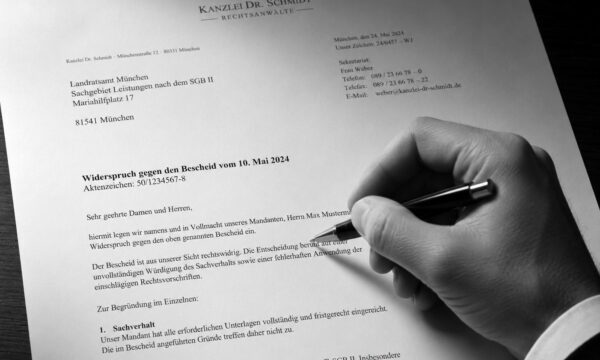
Action for Performance
An action for performance seeks the issuance of an administrative act that the authority has improperly refused to issue—typically, the granting of a settlement permit, a promise of naturalization, or a residence permit. When combined with an action for failure to act, an action for performance is the most powerful tool against delinquent or uncooperative immigration authorities.
Munich Administrative Court — In Practice
With eleven chambers, the Munich Administrative Court is one of the largest administrative courts in Germany; several of its chambers specialize in immigration law. Processing times from the filing of a complaint to the first decision typically range from six to twelve months—though they are significantly shorter for urgent motions. We also file complaints electronically via the beA (special electronic attorney mailbox), which formally expedites their receipt.
Lawsuit Against the German Diplomatic Mission Abroad
In visa-related lawsuits against German diplomatic missions abroad (the Embassy in Beirut, the Consulate in Istanbul, the Consulate in Mumbai, etc.), jurisdiction lies not with the Munich Administrative Court but with the Berlin Administrative Court. We file the lawsuits there and handle the cases from Munich.
Motion for Expedited Relief and Preliminary Injunction
Under immigration law, an urgent motion is the most powerful tool—when a lawsuit alone is not enough because, between the filing of the lawsuit and the judgment, there is already a risk of deportation, a deadline for departure, or the loss of a residence permit. The legal basis for this is Section 80(5) of the Administrative Court Rules (suspensive effect) and Section 123 of the Administrative Court Rules (interim order).
Suspensive effect pursuant to § 80(5) of the Administrative Court Rules of Procedure (VwGO)
In the case of adverse administrative decisions—such as deportation or revocation of a residence permit—the suspensive effect of the lawsuit is waived by law in many situations (immediate enforceability). In such cases, a standard lawsuit is not sufficient—we simultaneously file a motion for suspensive effect with the Munich Administrative Court. If the court grants the motion for a preliminary injunction, the decision is not enforceable until a ruling is issued on the merits of the case—meaning no deportation and no expulsion.
Preliminary Injunction Pursuant to § 123 VwGO
If the authorities refuse to act even though they are required to do so—for example, by refusing to issue a provisional residence permit or refusing to schedule an appointment for renewal—we will file a motion for a preliminary injunction. The Munich Administrative Court can then order the authorities to take action on a provisional basis. When there is a risk of a gap in residence status, this is often the only quick solution.
Urgent Petition Against Imminent Deportation
When deportation is imminent, an urgent application is the last resort. We file a motion for suspensive effect against the decision and, if necessary, simultaneously seek a preliminary injunction against the enforcement authority. Processing time at the Munich Administrative Court for urgent matters typically ranges from a few days to weeks—and, depending on the urgency, can even be completed within 24 hours. In cases of an imminent threat of deportation, it is essential to retain legal counsel immediately; every hour counts.
FROM OUR PRACTICE – EMERGENCY MOTION WITH SUSPENSIVE EFFECT
In the case of a client who received a notice denying an extension of stay and, at the same time, a deportation order to leave the country within two weeks: The notice was immediately enforceable; a standard lawsuit would not have stopped enforcement. From our experience: In precisely such situations, an urgent motion under § 80(5) VwGO is the only effective remedy. We filed the motion with the Munich Administrative Court within 48 hours; the court granted suspensive effect a few days later. This halted enforcement until a decision on the merits was reached. We had to anonymize the details—pursuant to Section 6 of the BORA (as amended)—but practical logic shows: Anyone who receives an immediately enforceable denial notice has no time to wait. The motion for urgent relief must be filed within 24 to 48 hours.
“Urgent motions and actions for failure to act are not empty threats in immigration law—they are perfectly normal procedural tools. Any client who doesn’t know they exist is under the illusion that the authorities are always right. Any lawyer who doesn’t use them confidently is letting their clients down in the very proceedings that would put the most pressure on the administration. We see this every week on Heimeranstraße—and that’s exactly why these tools are part of our standard repertoire.”
— Johannes Goetz, Attorney at Law, specializing in banking and insurance law (with experience in administrative law, particularly in the area of immigration law)
Consultations in Ukrainian and Russian — Denys Osypenko
At KLAMERT & PARTNER, we have Denys Osypenko, a lawyer at our firm who assists clients in Ukrainian and Russian. This language combination is particularly valuable in the area of administrative proceedings and legal remedies: administrative decisions are written in legal German, as are statements of claim and motions for summary relief—if a client does not understand the decision, they cannot determine whether it should be challenged. Denys Osypenko is a trained lawyer with ties to Ukraine; he is not a licensed attorney under German law at our firm—the legal handling of administrative procedure cases is carried out by the licensed attorneys Markus Klamert, Marc Frey, and Johannes Goetz.
What Denys Osypenko does in these cases is serve as a linguistic and cultural bridge. He translates the rejection notice from the Munich Asylum and Refugee Office (KVR), explains the deadline for filing a lawsuit in Ukrainian or Russian, assesses the chances of success, and prepares clients for their initial consultation with a licensed attorney. When the deadline for filing a lawsuit is imminent (one month from notification) or deportation is imminent, prompt advice in the client’s native language is often crucial—many Ukrainian- and Russian-speaking clients in Munich don’t call until the decision is already three weeks old and only seven days remain in the filing period. Consultation appointments are conducted in Ukrainian or Russian; the legal explanations, petitions, and all correspondence with authorities are signed by a licensed attorney.
How Your Administrative Law Attorney in Munich Works — Four Steps
1. Free initial assessment within 24 hours
Please describe your situation to us—via the contact form, by phone, or in person at Heimeranstraße 37. Languages: German, English, Ukrainian, Russian, Portuguese. We’ll get back to you within one business day with an initial assessment of your situation: Which procedural step is necessary—a certificate of fictitious residence from the Munich KVR, an action for failure to act before the Munich Administrative Court, an action to challenge a decision, or an urgent motion with suspensive effect. In cases involving tight deadlines (such as a one-month filing deadline or the threat of deportation), we’ll give your inquiry significantly higher priority.
2. Analysis of Decisions or Files
Once we have been retained, we review the decision, the correspondence with the immigration authorities, and all relevant documents. For renewal cases, we verify that the application documents are complete; for litigation cases, we systematically break down the decision into formal and substantive deficiencies. Depending on the complexity of the case, this phase takes anywhere from a few days to two weeks.
3. Communication with government agencies or filing a lawsuit with the Munich Administrative Court
For administrative cases: legal correspondence with the Munich KVR, optimizing applications, extending provisional residence permits, and preparing for in-person appointments. For litigation cases: filing a complaint with the Munich Administrative Court (Bayerstraße 30)—or with the Berlin Administrative Court for visa proceedings—and, if necessary, filing an urgent motion pursuant to § 80(5) or § 123 of the Administrative Court Rules (VwGO). We file electronically via the beA system to formally ensure receipt.
4. Administrative Decision, Settlement, or Judgment — and Enforcement
Many administrative proceedings following an action for failure to act result in a favorable decision from the Munich Regional Administrative Court (KVR); many litigation cases end with a court-mediated settlement or the annulment of the decision. In the case of expedited applications, the court’s decision is typically issued within a few days to a few weeks. We coordinate the implementation—issuance of the residence permit, follow-up cases (family reunification, settlement permit, naturalization), and, if necessary, further proceedings in connection with subsequent decisions.
Frequently Asked Questions About Administrative Procedures and Legal Remedies
How much does a lawyer cost for administrative proceedings under immigration law?
The initial assessment at KLAMERT & PARTNER is free of charge. Any further consultation takes place after you retain our services—either based on RVG fees calculated according to the value in dispute (typically €5,000 to €10,000 in immigration law) or according to an individual fee agreement. Separate procedural fees apply for actions for failure to act and actions to set aside. If you have legal expense insurance that includes administrative law coverage, we will handle the coverage inquiry—many legal expense insurance policies also cover proceedings related to the right of residence. Practical note: For purely administrative cases without litigation, attorney’s fees are often in the low four-digit range; they are correspondingly higher if litigation is involved.
What is a certificate of fiction?
The provisional residence permit under Section 81 of the Residence Act (AufenthG) is the official documentation confirming that you are legally residing in Germany under residence law, even though your actual residence permit has expired or has not yet been issued—specifically because you applied for an extension or issuance in a timely manner. It is issued by the Munich Residence Permit Office (KVR München) in Munich, is typically valid for three or six months, and can be extended. It permits you to engage in gainful employment, provided that your original permit also did so.
How do I renew my residence permit in Munich?
Schedule an appointment online with the KVR Munich (Ruppertstraße 19, Foreigners’ Affairs Division)—typically eight to ten weeks before your current permit expires. Submit a written application well in advance of the expiration date so that the deemed validity under Section 81(4) of the Residence Act (AufenthG) takes effect. Documents: Passport, biometric photo, certificate of residence registration, lease agreement, health insurance, proof of sufficient funds to cover living expenses, and additional documents depending on the purpose of your stay. We will prepare you for the appointment and accompany you if you wish.
What should you do if your certificate of fictitious employment has expired?
As long as the renewal application is still being processed, the provisional certificate can be extended. We will contact the KVR in Munich, document the current status, and secure an extension of the certificate. Important: An expired provisional certificate alone does not mean that your stay has become unlawful—the provisional status of the application remains in effect until the authorities make a decision. However, without a current certificate, it can be difficult to prove your status to employers, health insurance providers, and banks.
My residence permit has expired—what can I do?
If you submitted your application for extension in a timely manner before the expiration date, you are protected by the deemed validity provision of Section 81(4) of the Residence Act (AufenthG). If the application was submitted only after the expiration date, you are initially considered to be in Germany illegally—until the authorities make a decision. We will examine the possibility of filing a motion for reinstatement due to a missed deadline through no fault of your own and will work with the KVR Munich to find a solution in Germany. Leaving the country and re-entering via the visa process from your home country is almost always the less favorable option.
Can I sue the Immigration Office?
Yes, in two scenarios. First, if the agency fails to make a decision—an action for failure to act under § 75 VwGO. Second, if the authority has issued a negative decision—an action to challenge the decision and an action for specific performance. The deadline for filing a lawsuit against such decisions is one month from the date of notification. Lawsuits against the Munich KVR are filed with the Munich Administrative Court (Bayerstraße 30); lawsuits against German diplomatic missions abroad are filed with the Berlin Administrative Court.
The Immigration Office isn't responding to my letters—what can I do?
There are three options, depending on the situation. First: a letter from an attorney requesting an update on the status of the matter and setting a deadline. Second: a lawsuit for failure to act filed with the Munich Administrative Court if an application has been pending for three months or longer without a decision. Third: a preliminary injunction under § 123 VwGO if there is an urgent need for relief (for example, an expiring provisional residence permit that has not been extended). In our free initial assessment, we’ll determine which course of action is most effective in your specific case.
What is an action for failure to act, and when is it worth pursuing?
An action for failure to act under § 75 VwGO compels a delinquent agency to render a decision. The minimum waiting period is three months from the date the application was filed. In our Munich practice, we recommend filing the action no sooner than twelve to 15 months after the application was submitted, provided there has been no serious progress on the matter. This is currently the most important tool, particularly in naturalization proceedings. In many cases, the authority issues a decision within a few weeks of the action being filed—the pressure exerted by the action is usually sufficient.
How does an expedited application work under immigration law?
In cases of imminent deportation, a deportation order, or the imminent loss of a residence permit, an urgent application under Section 80(5) of the Administrative Court Rules (VwGO) (suspensive effect) or Section 123 of the VwGO (preliminary injunction) is the decisive lever. The Munich Administrative Court typically rules on urgent matters within a few days to a few weeks—and within 24 hours in cases of an imminent threat of deportation. If deportation is imminent, the rule is: hire a lawyer immediately; every hour counts.
Where is the Foreigners' Registration Office located in Munich?
The KVR Munich, Foreigners’ Affairs Division, is located at Ruppertstraße 19, 80466 Munich. It is accessible by subway (U3/U6 Implerstraße). Appointments are generally scheduled online via the Munich Citizens’ Office portal. The KVR is easily accessible by subway from our law office at Heimeranstraße 37.
Where is the Munich Administrative Court located?
The Munich Administrative Court is located at Bayerstraße 30, 80335 Munich, in the Ludwigsvorstadt district—within walking distance of Munich Central Station. This is where lawsuits against the Munich City Council (KVR), motions for summary relief, and all Bavarian administrative disputes are heard. The court of appeals is the Bavarian Administrative Court in Munich. Lawsuits against German diplomatic missions abroad—including visa proceedings—are heard by the Berlin Administrative Court.
What happens if I provided false information to the Immigration Office?
Providing false information to the Immigration Office can jeopardize your residence permit retroactively—if the false information is discovered later, the permit may be revoked under Section 52 of the Residence Act (AufenthG), and in serious cases, you may even face criminal charges for fraudulently obtaining a residence permit. Anyone who has provided false information or is unsure whether the information was correct should seek legal counsel before taking any further steps in the proceedings—we will review the facts of the case and develop a strategy to correct the situation in a way that minimizes damage as much as possible.
Request a free initial assessment
Tell us about your case—quickly and with no obligation. We’ll assess your chances of success and get back to you shortly.
or call us directly at: 089 540 239 0
Frequently Asked Questions About Deportation, Removal, and Protective Measures
What is deportation?
Expulsion is an official order requiring a foreign national to leave the country, as provided for in sections 53 et seq. of the Residence Act (AufenthG). It terminates the residence permit and triggers a deadline for departure; as a rule, it is accompanied by a temporary ban on entry and residence pursuant to section 11 of the Residence Act (AufenthG). Expulsion is a discretionary decision—the interest in remaining and the interest in expulsion are weighed against one another.
What is deportation?
Deportation is the state’s enforcement of the obligation to leave the country—the compulsory termination of the stay of a person who is required to leave but does not do so voluntarily. Deportation and the relevant procedures are governed by sections 58 et seq. of the Residence Act. The prerequisites are an enforceable obligation to leave the country and a notice of deportation issued with reasonable notice.
What is the difference between expulsion and deportation?
Expulsion is the legal act that establishes the obligation to leave the country (administrative act pursuant to § 53 et seq. of the Residence Act). Deportation is the state’s enforcement of this obligation to leave the country (enforcement measure pursuant to Sections 58 et seq. of the Residence Act). An expulsion may end without deportation if the person leaves voluntarily; a deportation may take place without an expulsion if the obligation to leave the country exists for other reasons (for example, following a rejected asylum application).
What does "reported" mean?
Expulsion refers to a situation in which the Immigration Authority has issued a formal notice requiring a foreign national to leave the country. Expulsion results in the revocation of residence permits and associated rights; it triggers a deadline for departure and typically leads to a temporary ban on entry and residence.
What is a deportation order?
An expulsion order is the formal decision by which the Foreigners’ Registration Office orders the expulsion. It contains the expulsion order, the duration of the entry and residence ban, the order to leave the country, and the threat of deportation. In Bavaria, an action for annulment may be filed against the expulsion order with the Munich Administrative Court—the deadline for filing is one month from the date of service.
How can I prevent an impending deportation?
The most important legal remedy is an application for preliminary relief under Section 80(5) of the Administrative Court Rules (VwGO) at the Munich Administrative Court. Other options include asserting a prohibition on deportation under Section 60 of the Residence Act (AufenthG), filing a motion to suspend deportation under Section 60a of the Residence Act (tolerated stay), and, if applicable, submitting a hardship case application to the Bavarian Hardship Commission. In any case: seek legal advice promptly, as urgent applications typically must be filed within a few hours of learning the deportation date.
How much does a lawyer cost in an asylum proceeding?
Legal fees in asylum proceedings are based on the RVG fee schedule, which is determined by the statutory value of the matter. In practice, the costs typically range in the low four-digit range per case. If you are financially in need, you may be eligible for legal aid—we will file the legal aid application along with the complaint.
What is legal aid in asylum proceedings?
Legal aid (PKH) is granted by the Administrative Court if the lawsuit has a reasonable chance of success and the applicant is unable to cover the legal costs (Section 114 of the Code of Civil Procedure (ZPO) in conjunction with Section 166 of the Administrative Court Rules (VwGO)). If granted, the state treasury covers the attorney’s fees. PKH is the standard mechanism for ensuring legal representation in asylum and residency proceedings.
Are there any free lawyers for refugees?
Legal representation is not free under German law—but the costs may be covered by the state through legal aid (PKH) if the eligibility requirements are met. In addition, there are counseling centers in Munich, such as the migration counseling services offered by Caritas, Refugio München, and the Bavarian Refugee Council, which provide free initial consultations and, if necessary, assistance with filing applications—legal representation in court proceedings is provided by licensed attorneys with PKH or on a standard fee basis.
What is the Bavarian Hardship Commission?
The Hardship Commission is part of the Bavarian State Ministry of the Interior, Sport, and Integration. It may recommend to the Minister of the Interior that a residence permit be granted on humanitarian grounds (Section 23a of the Residence Act) to a person required to leave the country if there are compelling humanitarian or personal reasons. The Commission is the final authority once all legal avenues have been exhausted.
What is a ban on deportation under Section 60 of the Residence Act?
- Section 60 of the Residence Act protects foreign nationals from being deported to a country where they would face persecution (Section 60(1)), torture, inhuman or degrading treatment (Section 60(5) in conjunction with Article 3 of the ECHR), or a substantial and concrete threat to life, limb, or liberty (Section 60(7))—including for health reasons, if adequate treatment is not available in the destination country.
What is a "Duldung"?
Tolerated stay under Section 60a of the Residence Act temporarily suspends deportation—it is not a residence permit, but rather confirmation that deportation is temporarily impossible. Toleration status offers pathways to lawful residence—provisions granting the right to remain for well-integrated young people (Section 25a of the Residence Act), sustainable integration (Section 25b of the Residence Act), and the right of residence based on opportunity (Section 104c of the Residence Act).
Free Initial Consultation with Your Attorney Specializing in Administrative Proceedings
Describe your situation to us in two or three sentences—we’ll review, with no obligation, which procedural steps are necessary and which deadlines are currently in effect. If the deadline for filing a lawsuit is imminent (only one month from notification!), you’re facing imminent deportation, your provisional residence permit has expired, or the authorities are failing to act, we’ll get back to you within one business day—or sooner in urgent cases. Contact us online via our contact form, by phone at 089 540 239 0, or in person at Heimeranstraße 37 in Munich. Languages: German, English, Ukrainian, Russian, Portuguese. At KLAMERT & PARTNER, administrative proceedings under immigration law serve as the cross-cutting function for our entire immigration law practice—responsible partners: Markus Klamert, Marc Frey, and Johannes Goetz. Initial consultations in Ukrainian and Russian are provided by our legal advisor Denys Osypenko; legal representation is handled by our licensed attorneys.